What Happens When a Lender Balks at Financing Woodbridge Acreage?
The deal does not have to die, but you have to move fast and find out exactly why the lender hesitated. Woodbridge REALTOR® Jeremiah Patterson works the appraisal, the outbuildings, the well and septic, and the loan product together with the buyer's lender to locate the actual objection, then lines up a backup plan before the contingency period runs out.
The panic you feel in that moment is real. You are weeks into escrow, you have made plans around this closing, and a stranger at a bank you never chose has put the whole thing in question. Most of the time it is fixable, and always faster to fix if you understand the mechanism. Here is what is actually happening.
TL;DR: Lenders rarely say no to acreage outright. Usually something in the file trips an underwriting guideline: excess acreage the appraiser cannot support with comparables, outbuildings that look agricultural, a well or septic that needs testing or repair, a property type the loan product does not cover, or a value that came in short. Each has a different fix. Get the specific written reason, work it with the lender, and know whether a different product or a portfolio lender solves it. The buyer's lender is the authority on the buyer's loan.
Why do lenders get nervous about acreage in the first place?
Because most residential loan programs were designed around suburban houses on ordinary lots, and your property is not that.
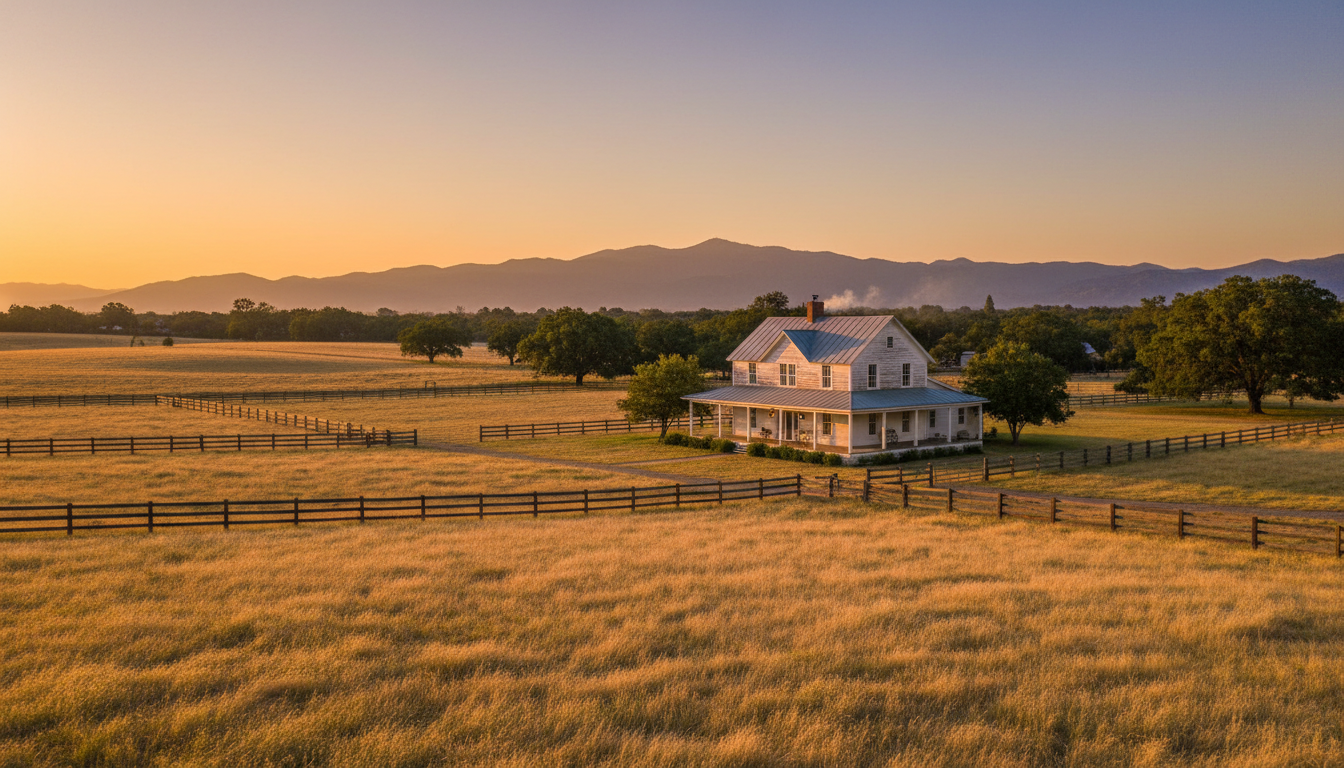
Conventional and government backed residential loans are underwritten against guidelines built for a standardized product. A house on a quarter acre with public water and sewer and a dozen recent comparable sales within a mile fits the model perfectly. A house on several acres near the Mokelumne with a well, a septic system, a large shop, a barn, and three comparable sales in eighteen months does not.
None of that means your property is a bad asset. It means it is harder to underwrite mechanically, and underwriting is a mechanical process. That distinction tells you where the leverage is: you are not arguing about whether your property is nice, you are helping a file satisfy specific written criteria.
What are the actual reasons a lender balks?
There are a handful, and they repeat.
Excess land. Many programs limit how much value can come from land, or expect site size to be typical for the area. An appraiser who cannot find comparable sales with similar acreage may struggle to support the value.
Outbuildings and agricultural features. A large shop, multiple barns, corrals, or commercial scale improvements can push a property toward agricultural rather than residential classification. Residential programs generally do not finance income producing farm operations.
Well and septic conditions. Many programs, particularly government backed ones, have requirements around water potability, well flow, separation distances, and functioning wastewater systems. A failed water test or an unpermitted septic can stop a file cold.
Access. A private road without a recorded maintenance agreement, or access by easement across another parcel, can raise questions.
Appraisal came in low. Not really a lender problem, but it surfaces at the same moment and feels identical.
Property condition. Deferred maintenance, a roof at the end of its life, or safety items can trigger required repairs before funding on some programs.
The wrong loan product. Sometimes the buyer simply chose a program that was never going to work for this property type.
What is the first thing to do when you get the call?
Get the reason in writing, from the lender, in specific terms.
"The lender has concerns about the acreage" is not actionable. "The underwriter is requiring an additional comparable sale with similar site size" is. So is "the water potability test failed" and "the property is being classified as agricultural because of the improvements."
Ask the buyer's agent for the underwriter's actual condition list, then work that specific condition. Every hour spent guessing is an hour off your contingency period. Ask two more questions while you are at it: what loan product the buyer is using, and how long the file has been in underwriting. The answers frequently explain everything.
How do you fix an appraisal or comparable sales problem?
Carefully, and with material rather than argument.
Appraisers on rural property have a genuinely hard job. Comparable sales are scarce, the properties are heterogeneous, and the adjustments are large. You cannot pressure an appraiser and you should not try. What you can do is supply information through the proper channel.
Provide a comparable sales package. Sales of similar acreage in the surrounding rural areas, including adjacent communities, with notes on why each is comparable. Give it to the lender to forward.
Document the improvements. The shop, its construction, its power service, its permits, the well, the septic, the fencing, the irrigation, and any recent replacement. Appraisers cannot credit what they do not know about, and on acreage the value is frequently in things not visible in a thirty minute walkthrough.
Provide permits. Permitted square footage counts differently from unpermitted square footage. If your shop or addition is permitted, prove it.
Request reconsideration of value through the lender's process if the material warrants it. Every lender has one. Use theirs.
If the value still comes in short, the parties negotiate: the buyer brings cash, the price adjusts, they split the difference, or the deal ends. That is a commercial conversation, not a technical one.
What if the problem is the well, the septic, or the outbuildings?
Then you are in the part of rural selling that has nothing to do with the house.
Water. Many lenders require a potability test and some require a flow test. If it fails, the usual path is treatment or repair followed by a retest. Use a licensed contractor and county environmental health, not a handyman. What you should know about wells and septic when buying near Lodi covers what gets tested and why.
Septic. If the system needs pumping, repair, or certification, schedule it immediately. If it is unpermitted or was modified without a permit, that is a bigger conversation with San Joaquin County environmental health and it may take longer than your escrow allows.
Outbuildings. If the concern is agricultural classification, the fix is usually documentation showing residential use and personal rather than commercial improvements. If part of the property is leased to a farming operation, say so early.
Unpermitted structures. Disclose what you know, provide the permit history that exists, and expect a lender to exclude unpermitted square footage from value. Never represent unpermitted space as permitted.
The rural and semi rural Woodbridge guide to wells, septic, and acreage is the reference for all of this, ideally read before you list.
When is the answer a different lender or a different loan?
More often than sellers expect.
Not every lender treats acreage the same way. Guidelines, overlays, and appetite all vary. A regional bank, a credit union with agricultural experience, or a portfolio lender that keeps loans on its own books can often do what a large national retail shop cannot, because a portfolio lender writes its own rules. There are also programs designed for rural property, though eligibility depends on the property, the borrower, and the intended use. A mortgage broker experienced with San Joaquin County rural property is the person to ask.
Switching lenders mid escrow costs time and usually requires an extension. Whether you grant it depends on your alternatives, which is exactly why you should know them before this happens.
How does good marketing prevent this from happening at all?
By controlling who your buyer is before you ever open escrow.
A financing collapse on acreage is usually the last symptom of a marketing decision made weeks earlier. If your listing went out broadly, attracted a buyer who liked the pictures, and that buyer walked in with a loan product built for a suburban tract home, the failure was baked in on day one.
The rural buyer pool is smaller and much more specific than the pool for a home in town. Generic exposure does not find those people, it finds everyone else. The Master Listing Strategy on acreage means targeting buyers who already understand rural property and arrive with a lender that has financed a well and a shop before. Practically:
Vetting the pre approval, not just reading it. Ask which lender, which product, and whether the loan officer has closed rural property in San Joaquin County. A buyer's agent who cannot answer is telling you something.
Front loading the property documentation. Well log, flow and potability results, septic records, outbuilding permits, survey, easements. When that packet exists at listing, the appraiser and the underwriter get it early instead of discovering gaps late.
Ordering testing before listing. A current water test and a septic certification in hand remove two of the most common escrow killers before anyone writes an offer.
Marketing to people who already live this way. Buyers relocating from other rural areas, buyers with horses or equipment, buyers who want the river and the space. Buying a home in Woodbridge and what to expect from lot sizes and home styles is the mindset your best buyer already has.
Marketing creates demand, and on acreage it also creates a better qualified buyer. Price alone does neither.
Step by step: working a lender problem in escrow
- Get the underwriter's written condition list through the buyer's agent. No paraphrasing.
- Identify the category: value, property type, systems, access, condition, or product.
- Call a meeting with the buyer's lender, putting both agents and the loan officer on the same call.
- Assemble supporting documentation for the specific condition: comparable sales, permits, system records.
- Order any required testing or service immediately, using licensed professionals.
- Request reconsideration of value through the lender's formal process if the appraisal is the issue.
- Ask whether a different product with the same lender solves it before assuming you need a new lender.
- Identify a portfolio or regional lender familiar with San Joaquin County rural property as a parallel track.
- Negotiate any extension in writing, with a firm date and a defined deliverable, and keep marketing quietly active so you know your backup.
Common Mistakes to Avoid
Accepting a vague reason. "Underwriting has concerns" is not information. Push politely until you have the actual condition in writing.
Arguing with the appraiser. It does not work and can create compliance problems. Submit material through the lender's process instead.
Waiting for the buyer's side to solve it. They may not have the documents, the local knowledge, or the urgency.
Letting the contingency period run while you hope. Extensions are easier to get before a deadline than after one.
Discovering the septic is unpermitted during escrow. Find out before you list. County records are public.
Skipping the pre approval interview. Reading the letter is not vetting the loan. Ask what the lender has actually closed on acreage.
Cutting the price because a lender said no. A financing failure is not market feedback. Do not confuse the two.
What This Looks Like in Real Life
A Woodbridge property on several acres goes into escrow with a buyer using a common government backed loan. Two weeks in, the lender flags that the water potability test showed bacteria and that the large shop is raising questions about agricultural use. The seller responds on both fronts: a licensed well contractor treats the well and a retest comes back clean, and the seller supplies documentation showing the shop is used for personal vehicle and equipment storage rather than any commercial operation, along with the original building permit. The underwriter clears both conditions and the file closes about ten days later than scheduled.
A second scenario: an appraisal comes in below the contract price because the appraiser could not find recent comparable sales with similar acreage. The listing side submits six rural sales from the surrounding area with notes on comparability, plus permit records for a shop the appraiser had valued as unpermitted. The lender's reconsideration process brings the value up part of the way, the parties split the remaining gap, and the deal closes. Neither side got everything, but it held because the response was documentary rather than emotional.
Neither scenario predicts your result. But the sequence works: find the specific condition, answer it with documents, and keep a second path open.
Frequently Asked Questions
Why will some lenders not finance acreage?
Most residential loan programs are written around standardized suburban properties. Acreage introduces excess land, scarce comparable sales, wells, septic systems, and outbuildings that can trigger guideline questions. The buyer's lender is the authority on what their program allows.
Can a low appraisal on rural property be challenged?
Every lender has a formal reconsideration of value process. You can submit additional comparable sales and documentation of improvements and permits through the lender. You cannot contact the appraiser directly, and there is no guarantee the value changes.
What loan types work best for Woodbridge acreage?
It depends on the property, the buyer, and the intended use. Portfolio lenders, regional banks, credit unions with agricultural experience, and certain rural housing programs are often more workable than large national retail lenders. Ask a mortgage broker who has closed rural property in San Joaquin County.
Should I test the well and septic before listing?
On acreage, usually yes. A current potability test and a septic certification remove two of the most common causes of escrow failure and let you fix problems on your schedule. Use licensed providers and check requirements with San Joaquin County environmental health.
If the lender kills the deal, do I have to lower my price?
No. A financing failure caused by loan product or underwriting guidelines is not the market telling you the price is wrong. Before adjusting anything, check whether your marketing was reaching buyers who arrive with lenders that can finance rural property.
Ready to sell your Woodbridge acreage without a financing surprise?
Prepare the file, vet the buyer, keep a backup. Three steps:
- Order a water test and a septic inspection and pull your permit history from San Joaquin County before you list, so nothing gets discovered under a deadline.
- Get a realistic value picture that accounts for the land and the outbuildings. Start with a free home evaluation.
- Build a campaign aimed at buyers who understand rural property and arrive with lenders who have financed it. Get in touch and we will walk the property, build the packet, and vet every offer's financing before you sign.
Jeremiah Patterson is a REALTOR® and Vice President at Cornerstone Real Estate Group (CA DRE #02017640), with 220+ closed transactions and more than $87 million in San Joaquin County sales since 2016. His listings sell in a median of 13 days, with 55% under contract within 14 days, and he holds a 5.0 rating across 180 verified reviews (RateMyAgent 72, Realtor.com 61, Google 32, Yelp 15). He's a Move-Up Specialist and works with out-of-state, remote, and inherited/estate sellers as well as first-time buyers across Lodi, Stockton, Woodbridge, Acampo, Galt, and San Joaquin County. He was named RateMyAgent County Top 5 for San Joaquin County five consecutive years (2022-2026) and is a Lifetime Member of the Lodi Association of REALTORS® Masters Club. Reach him at (209) 329-7238 or jeremiah@sellingsanjoaquin.com.
Before you list, read the rural and semi rural Woodbridge guide to wells, septic, and acreage and what you should know about wells and septic when buying near Lodi. Selling from a distance? How to sell a Woodbridge home from out of state covers coordinating inspections remotely.
Jeremiah Patterson Cornerstone Real Estate Group 224 W Pine St, Lodi, CA 95240 Phone (209) 329-7238 Email jeremiah@sellingsanjoaquin.com CA DRE #02017640 · Brokerage DRE #01037761 Practicing since 2016
Categories
Recent Posts

GET MORE INFORMATION