What Does a Canal Lot Mean When You Sell on Cabrillo Circle in Lodi?
Selling a canal lot on Cabrillo Circle in Lodi means answering the canal questions before buyers ask them: what the easement allows, who can use the canal side, how the water runs through the year, and how the fence and gate are handled. Jeremiah Patterson prepares Cabrillo Circle sellers to disclose clearly and market the open outlook as the feature it is.
TL;DR: Many homes on Cabrillo Circle, in Lodi's Kristmont Acres neighborhood (ZIP 95242), back up to a Woodbridge Irrigation District canal. That can be a selling point, with no house directly behind you and a longer view, or a source of buyer hesitation if easements, access and safety are left vague. Pull your title report early, disclose what you know, verify what you do not, and market the backyard on purpose.
Why Does a Canal Lot Change the Sale on Cabrillo Circle?
Cabrillo Circle is a street in Kristmont Acres, an established Lodi neighborhood in ZIP 95242, and listing descriptions for homes there regularly mention backyards that back up to a canal, some with a gate on the canal side of the fence. That canal belongs to the Woodbridge Irrigation District system. Formed in 1924, the district diverts Mokelumne River water at Lodi Lake and moves it through roughly 100 miles of canals to farmland and to the cities of Lodi and Stockton.
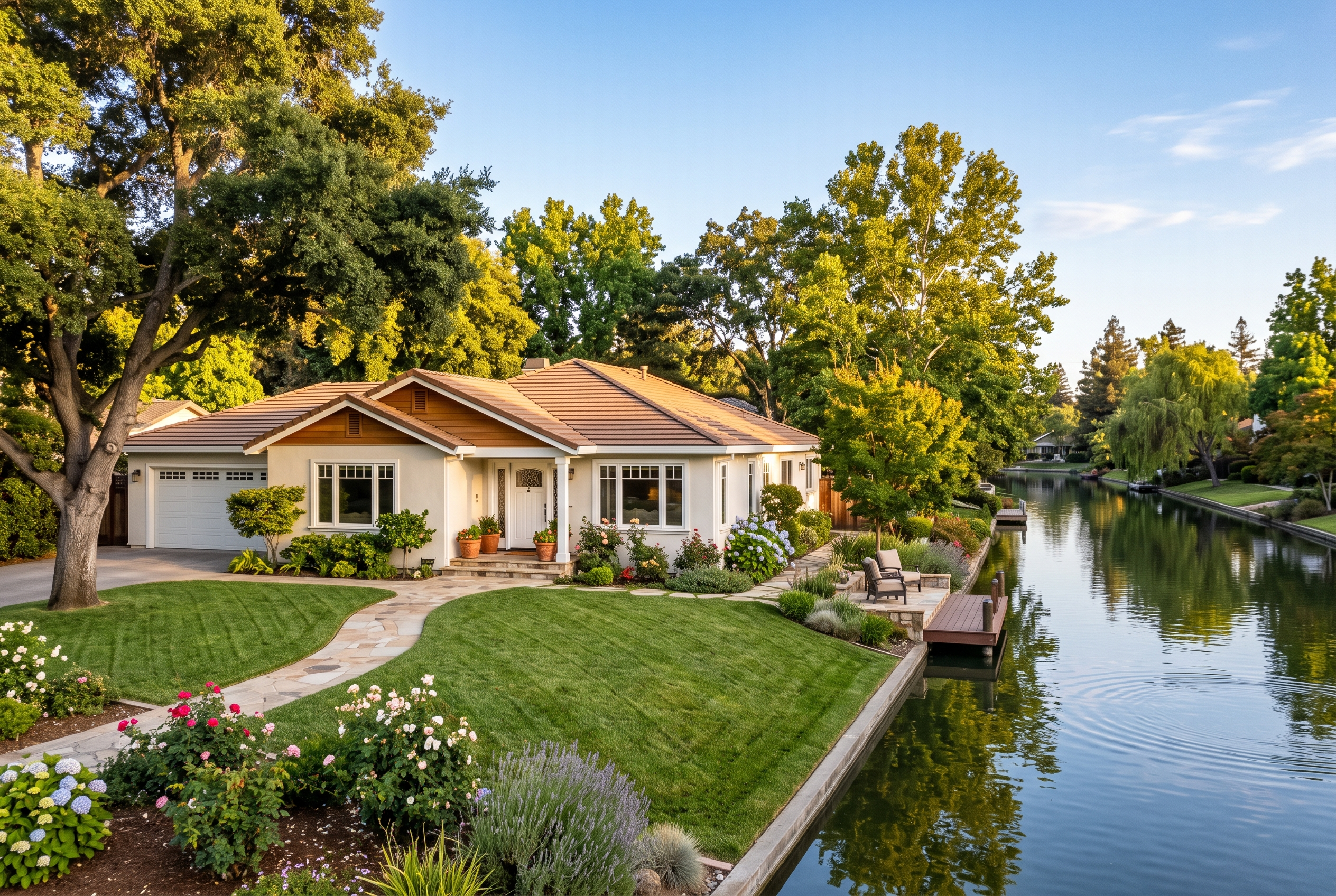
For a seller, that history matters less than what it means to a buyer standing in your backyard. A canal lot usually means no house directly behind you, a longer view, and a sense of space that most Lodi tract lots do not have. It also raises questions an interior lot never does. What can I build near the back line? Can I use that gate? Is it safe for my kids and my dog? Will the view look the same in January as it does in July?
Buyers who get clear answers tend to see the canal as a feature. Buyers who get shrugs tend to see it as a risk and shave their offer to match. Your job is to be the seller with clear answers.
Homes on the street are mostly established single-family houses, commonly listed at about 1,500 to 2,700 square feet with three bedrooms. That puts them in front of families, downsizers and move-up buyers, who are exactly the buyers who ask careful questions.
What Will Buyers Ask About the Canal?
Expect some version of every one of these, often at the first showing:
- Where does my lot end? Buyers want to know where the property line sits relative to the back fence and the canal.
- Is there an easement? Irrigation canals commonly come with recorded rights for the district to access and maintain them, and buyers will want to know what those rights cover.
- What can I build near the back? Pools, patio covers, sheds and fence changes near the rear of the lot are where canal questions turn into real limits.
- Is the gate mine, and can I use it? If your home has a gate onto the canal side, buyers will ask whether it was approved and what is on the other side.
- Does the water run all year? Irrigation canals often run differently in the growing season than in winter, so the view and the sound can change through the year.
- Is it safe? Parents of small children and dog owners will ask what separates the yard from the water and whether the gate locks.
- What about bugs, noise and privacy? Mosquitoes, maintenance vehicles and anyone using the canal bank all come up.
You do not need a perfect answer to every question on day one. You do need to know which ones you can answer from documents, which ones you can answer from your own experience, and which ones belong with the district or an attorney.
What Should You Disclose About the Canal Behind Your Home?
California's Transfer Disclosure Statement asks sellers about easements, encroachments and features shared with adjoining landowners, such as fences. A canal lot touches all three. The Natural Hazard Disclosure report adds mapped hazards, such as flood zones, for the parcel. Between the two, most of the canal story ends up in writing whether you plan for it or not, so plan for it.
A few principles keep canal disclosures clean:
- Start with the preliminary title report. Order it before you list rather than waiting for escrow. It shows recorded easements that affect the rear of the lot and lets you describe them accurately.
- Disclose what you know, and say how you know it. A sentence like "in our experience the canal runs from spring into fall" is more useful than silence and more honest than a promise.
- Do not guess at rules. If you are unsure what the district allows near its canal, say the buyer should verify with the Woodbridge Irrigation District.
- Mention past issues. Any seepage, fence damage, drainage trouble or disagreements along the back line belong in the disclosures.
Your agent can help you organize the information, but agents do not give legal advice. If an easement or a fence line is unclear, have a real estate attorney review the wording. For the broader checklist, see what you must disclose when selling a Lodi home.
Does Backing to the Canal Help or Hurt Your Price?
Both, depending on the buyer, which is exactly why pricing a canal lot takes more care than pricing an interior lot.
Buyers who value an open outlook and no rear neighbors will pay for it. Buyers with toddlers, or buyers who worry about privacy along the canal bank, may discount it. Your price has to work for the whole pool of likely buyers, not just the ones who fall for the view.
A few practical steps help:
- Compare like with like. Look for recent sales of canal-backed homes in Kristmont Acres and nearby 95242 neighborhoods, then interior-lot sales of similar size and condition. The difference between them, if there is one, is your best evidence.
- Expect thin comparables. A single street produces few sales, so you may need to widen the search and adjust carefully.
- Keep the citywide number in perspective. Lodi's median home value is about $517,600 (U.S. Census Bureau, ACS 2024). That figure will not price your home, but it keeps expectations grounded while you study the closer comparables.
For a full walk-through of how pricing decisions get made, read what a realistic price looks like for a Lodi home. Price inside the honest range, and the canal becomes one more reason a buyer picks your home. Price above it, and the canal becomes the reason they give for walking away.
How Do You Market the Canal as a Feature, Not a Question Mark?
Marketing creates demand, and price alone does not. On a canal lot, the marketing has to show the setting and answer the obvious questions before a buyer ever books a showing.
- Photograph the backyard on purpose. Show the open outlook from the patio and from inside the main living space. Shoot when it looks its best, but do not pretend it looks that way all year.
- Use an aerial photo. One overhead image shows exactly where the canal runs and how the lot sits along it, which removes a lot of guessing.
- Put the answers in the listing packet. A one-page summary of the easement language from the title report, the fence and gate details, and a note on how the water runs through the year saves every buyer the same five questions.
- Show the safety features. If the back fence is solid and the gate locks, say so and photograph it. Families will look for it.
- Tell the lifestyle story. No house directly behind you and a long view on an established Lodi street is a real draw for the right buyer.
If your home also has a pool, the safety conversation matters even more. See whether a pool helps or hurts a Lodi sale.
What Should You Check Before You List?
Do this work before the photographer arrives:
- Order the preliminary title report and read the easement language for the rear of the lot.
- Confirm your fence line. If the fence is not clearly on the property line, consider a survey so you are not guessing in the disclosures.
- Inspect the back fence and any gate. Repair damage, make sure the gate latches and locks, and find out whether it was ever approved.
- Contact the Woodbridge Irrigation District with any question about what is allowed near the canal behind your home, and keep a note of what you were told.
- Gather permits for any pool, patio cover or structure near the back of the lot.
- Clean up the rear yard so the view is the first thing a buyer notices, not overgrown landscaping.
Common Mistakes Cabrillo Circle Sellers Make With a Canal Lot
- Waiting for the buyer to bring it up. Every buyer sees the canal. Silence reads as a problem.
- Promising what the district has not. Never tell a buyer they can build, fence or gate something near the canal unless the documents or the district confirm it.
- Pricing off one neighbor's sale. One comparable on a small street is not a trend.
- Photographing only the front. The backyard is the reason a canal lot is different. Show it.
- Leaving the fence or gate in rough shape. A broken latch next to water turns a feature into an objection.
- Skipping the title report until escrow. By then, an easement surprise costs you leverage.
A Realistic Cabrillo Circle Scenario
Picture a couple who raised their kids on Cabrillo Circle and are now moving closer to their grandchildren. Their home backs to the canal and has an old gate in the back fence. Before listing, they order the title report, read the easement language, replace the gate latch, and add a one-page canal summary and an aerial photo to the listing packet. At the first open house, buyers ask about the canal, get a clear answer in writing, and spend the rest of the visit picturing dinners on the back patio.
A neighbor with a similar lot lists without any of that. Buyers ask the same questions, hear that it is probably fine, and several write offers with a discount for the uncertainty. Same street, same canal, different result.
Frequently Asked Questions
Do all Cabrillo Circle homes back up to the canal?
No. Listing descriptions show many homes on the street backing to the Woodbridge Irrigation District canal, but not every lot does. Check the parcel map and the preliminary title report for your specific address rather than assuming.
Do I have to disclose that my Lodi home backs to a canal?
Buyers can see the canal, but the details still belong in your disclosures. California's Transfer Disclosure Statement asks about easements, encroachments and shared features such as fences, so disclose what you know and have the wording reviewed if anything is unclear.
Does a canal lot sell for more or less on Cabrillo Circle?
It depends on the buyer. Some pay more for the open outlook and no house directly behind them, while others discount for privacy or safety concerns. Compare recent canal and interior lot sales in Kristmont Acres and nearby 95242 neighborhoods before choosing a price.
Does the canal have water in it all year?
Not necessarily. Irrigation canals often run differently in the growing season than in winter, so the flow behind your home can change through the year. Ask the Woodbridge Irrigation District what to expect and tell buyers what you have observed.
Can a buyer change the back fence or use the canal gate?
That depends on the recorded easements and any district rules, not on what previous owners did. Review the preliminary title report and contact the Woodbridge Irrigation District before promising a buyer anything about fences, gates or access.
Who should I talk to about selling a home on Cabrillo Circle?
Jeremiah Patterson, REALTOR and Vice President at Cornerstone Real Estate Group, lives in Lodi and works with sellers in Kristmont Acres and across the city. Call or text (209) 329-7238 to talk through pricing and disclosures for your home.
Ready to Sell Your Cabrillo Circle Home?
If you are thinking about selling a canal lot on Cabrillo Circle, start here:
- Order your preliminary title report and gather permits for anything near the back of the lot.
- Talk through pricing with canal and interior-lot comparables side by side.
- Build a listing plan that shows the backyard and answers the canal questions up front.
Jeremiah Patterson is a real estate agent in Lodi and Stockton, California (San Joaquin County) who helps move-up, downsizing and out-of-area sellers prepare, price and market their homes. When you are ready, read the full plan to sell your house in Lodi, request a home value estimate, or call or text (209) 329-7238.
About Jeremiah Patterson
Jeremiah Patterson is a REALTOR and Vice President at Cornerstone Real Estate Group (CA DRE #02017640), with 220+ closed transactions and more than $87 million in San Joaquin County sales since 2016. His listings sell in a median of 13 days, with 55% under contract within 14 days, and he holds a 5.0 rating across 180 verified reviews (RateMyAgent 72, Realtor.com 61, Google 32, Yelp 15). He's a Move-Up Specialist and works with out-of-state, remote, and inherited/estate sellers as well as first-time buyers across Lodi, Stockton, Woodbridge, Acampo, Galt, and San Joaquin County. He was named RateMyAgent County Top 5 for San Joaquin County five consecutive years (2022-2026) and is a Lifetime Member of the Lodi Association of REALTORS Masters Club. Reach him at (209) 329-7238 or jeremiah@sellingsanjoaquin.com.
Jeremiah Patterson Cornerstone Real Estate Group 224 W Pine St, Lodi, CA 95240 Phone (209) 329-7238 Email jeremiah@sellingsanjoaquin.com CA DRE #02017640 · Brokerage DRE #01037761 Practicing since 2016
Categories
Recent Posts

GET MORE INFORMATION