How Do You Sell a Stockton Home in a Flood Zone?
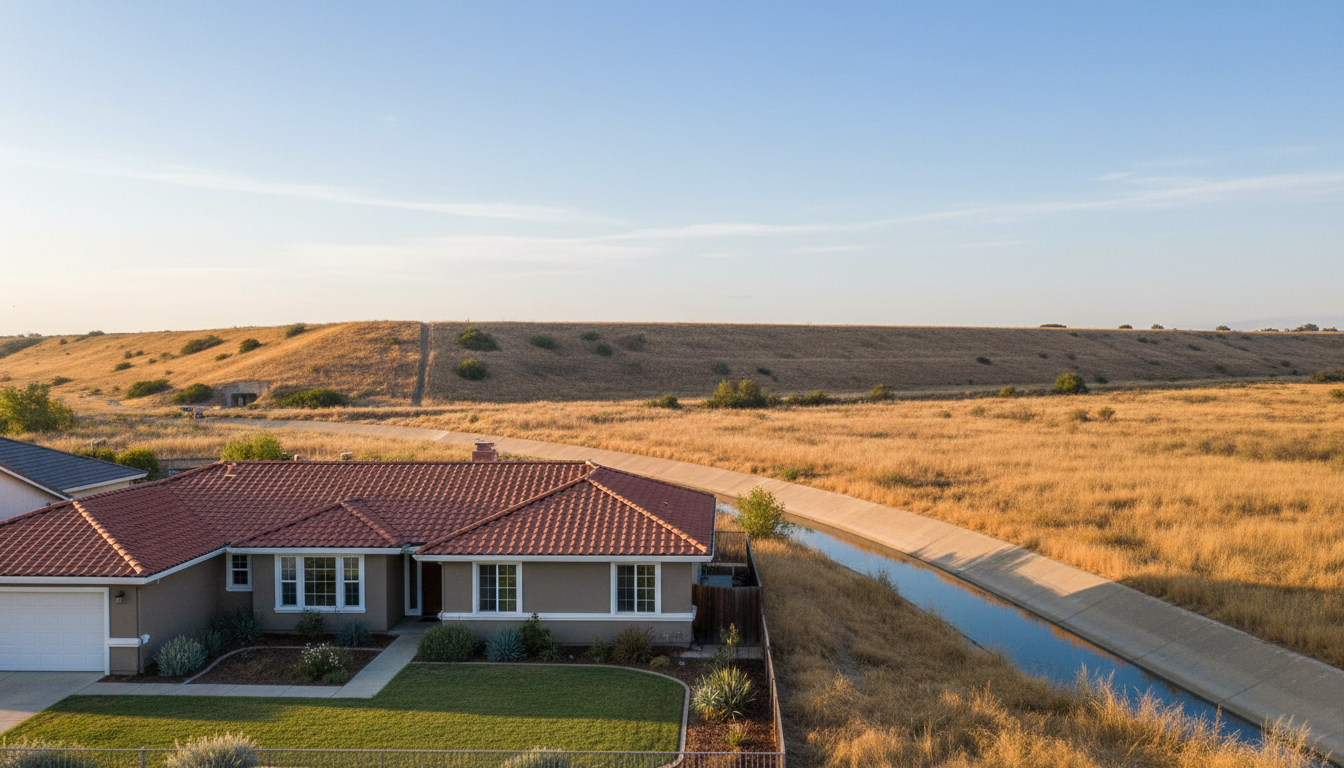
You can absolutely sell a Stockton home in a flood zone, and plenty of sellers do it every year. The work is front loaded: confirm the actual flood designation for your address, gather the insurance and elevation paperwork, and disclose it properly. Stockton REALTOR® Jeremiah Patterson builds that packet before launch so flood risk becomes a footnote instead of a deal breaker.
The fear underneath this question is usually specific. You are worried that the words "flood zone" in a listing will cut your buyer pool in half, or that a buyer will use it to grind your price down late in escrow. Both of those outcomes are real, and both are almost always caused by the same thing: the information arriving after the buyer is emotionally committed instead of before.
TL;DR: Stockton sits in a low lying part of the Central Valley near the Delta and a network of channels, sloughs, and levees, so flood designations are a normal part of real estate here rather than an exotic problem. Confirm your property's actual designation through FEMA's flood map service and your levee or reclamation district instead of guessing. Disclosure of flood hazard is a standard part of a California sale through the natural hazard disclosure process. Get an insurance quote and any elevation documentation early, price with clear eyes, and market to buyers who already understand the area. Insurance specifics belong with a licensed insurance agent, and legal questions belong with a real estate attorney.
Why does Stockton have flood zones at all?
Geography. Stockton sits at the eastern edge of the Sacramento San Joaquin Delta, where the San Joaquin River, the Calaveras River, Mormon Slough, Fourteenmile Slough, and a web of channels and canals run through and around the city. Much of the surrounding land is low, flat, and historically part of a floodplain, and a substantial amount of it is protected by levees maintained by reclamation and levee districts.
That combination means flood mapping in and around Stockton is detailed, it is taken seriously, and it changes over time as levee systems are evaluated and maps are updated. Properties near the Delta, near the deep water channel, near sloughs, and in some newer western Stockton developments are all part of that conversation in different ways.
None of this makes a home unsellable. It makes it a home with a known characteristic that needs a documented answer.
How do you find out what your property is actually designated?
You look it up, and then you verify it with the people who administer the local system.
Start with FEMA's flood map service center, which is the authoritative public source for the flood insurance rate map covering your address. Your lender, your insurance agent, and any buyer's lender will all be working from that mapping.
Then contact the relevant levee or reclamation district for your area, along with the City of Stockton or San Joaquin County depending on where the property sits. Local districts know their own systems, know what upgrades have been made, and know what evaluations are underway. That local layer matters, because levee accreditation status can affect how a property is treated.
Finally, talk to a licensed insurance agent about your specific address. An agent who writes policies here can tell you what coverage looks like in practice, which is different from what a map implies.
What you should not do is rely on a neighbor's memory, a general website, or an assumption based on the street. Designations can differ within a short distance, and a wrong answer given confidently to a buyer is worse than no answer at all. I am not going to tell you what zone your property is in, and neither should anyone else who has not pulled the actual map for your parcel.
What do you have to disclose?
Flood hazard is part of California's standard disclosure framework, and in practice most sellers here address it through the natural hazard disclosure report that gets ordered during a transaction. That report identifies whether a property falls within various mapped hazard areas, including flood related ones, and it is delivered to the buyer as part of the disclosure package.
Separately, you have your own knowledge to disclose. If the property has ever taken water, if a crawl space has flooded, if there is a sump pump, if a claim was ever filed, if there is a history of drainage problems in the yard or on the street, those are facts about your property that a buyer would want to know. Those go on your disclosures.
What you should disclose when selling a Stockton home covers the broader obligation, and what the SPQ disclosure covers in San Joaquin County walks through the questionnaire where a lot of this actually gets recorded. If you are unsure whether something rises to the level of a required disclosure, ask a licensed California real estate attorney rather than deciding on your own. The cost of asking is small. The cost of a nondisclosure claim after closing is not.
Does a flood designation mean the buyer has to carry flood insurance?
Sometimes, and the answer depends on the property and the loan rather than on any general rule.
Lenders on federally backed mortgages generally require flood insurance when a property is located in a designated high risk area. Whether that applies to your property, what the requirement looks like for a particular loan product, and what a policy would actually cost are questions for the buyer's lender and a licensed insurance agent. Premiums vary with elevation, construction, coverage levels, and the specific rating factors FEMA applies, and they change over time.
Do not quote a number to a buyer. Do not repeat what your neighbor pays. Get your own current quote in writing from a licensed agent and let the buyer get theirs.
What paperwork actually helps you sell?
This is where sellers gain or lose ground, and it is entirely within your control.
A current insurance quote or your existing policy declarations. A buyer who sees a real quote stops imagining a catastrophic number.
An elevation certificate, if one exists or if it makes sense to get one. An elevation certificate is prepared by a licensed surveyor and documents the elevation of the structure relative to the applicable flood elevation. In some cases it materially changes how a property is rated. Whether one is worth ordering for your home is a conversation with your insurance agent and a surveyor.
Documentation of any mitigation. Drainage work, grading, a sump pump, foundation vents, any improvement with a receipt and a date.
Records of any prior claim or prior water event, which you are disclosing anyway, along with what was done about it.
Information about the levee or reclamation district serving the area, including any known improvements.
Assembling this before you list is exactly the kind of thing the 14 day pre listing prep checklist for Stockton sellers is built for. A packet ready on day one converts a scary unknown into a handled item.
Does a flood zone hurt your price?
It can affect what a buyer is willing to pay, and pretending otherwise does not help you. But the size of that effect depends far more on how the situation is presented than on the designation itself.
Here is the mechanism. A buyer who learns about flood designation from your disclosure packet on day one is evaluating a known feature alongside everything else, the way they evaluate an older roof or a busy street. A buyer who learns about it in week three, from a lender who suddenly requires insurance the buyer did not budget for, is a buyer who feels ambushed. Ambushed buyers ask for price reductions or leave.
The second version costs you far more than the first. Surprise is the expensive part, not the water.
Price the property for what it is, with local comparable sales in similar circumstances, not against homes in unaffected areas. How to price a Stockton home in a slower market covers how to think about that honestly.
How do you market a home in a flood zone?
You market to the buyers who already understand the area, and you let the paperwork do the reassuring.
A large share of Stockton buyers already live in San Joaquin County or nearby. They know the Delta is here. They know levees exist. Flood designation is not a shocking revelation to a local buyer the way it is to someone relocating from a hillside town, and a buyer who already understands the tradeoff needs far less convincing.
That is the practical value of the Master Listing Strategy: instead of putting the home on the MLS and hoping the right person wanders past, you present the property professionally and push it to a targeted pool of buyers who are actually plausible for it. More qualified buyers means more competition, and competition is what protects your price when a property has any complication attached to it. Targeted digital buyer outreach for Stockton sellers covers the mechanics. Marketing creates demand. Price alone does not, and quietly discounting a flood zone home is a much worse strategy than finding the buyers who were never bothered by it.
Should you fix drainage issues before listing?
Sometimes, and the test is whether the work removes an objection or just spends money.
Correcting a genuine drainage problem in the yard, clearing gutters and downspouts that dump against the foundation, regrading a low spot that pools, servicing or installing a sump pump: this kind of work is usually visible, relatively affordable, and directly addresses what a buyer will notice on a walkthrough. Structural elevation of a house is an entirely different scale of project and rarely makes sense purely to sell.
The general framework in selling a Stockton home as is versus making repairs first applies here. Fix what a buyer sees and worries about. Document everything else.
Step by step: selling a Stockton home in a flood zone
- Pull your property's mapping from FEMA's flood map service center for your exact address.
- Contact the levee or reclamation district and the appropriate city or county office for local system information.
- Get a current quote from a licensed insurance agent, in writing, for your specific address.
- Ask whether an elevation certificate exists or whether ordering one from a licensed surveyor would help.
- Write down your own history with the property: water events, claims, drainage work, sump pumps.
- Order the natural hazard disclosure report as part of your normal disclosure process.
- Fix the visible drainage items that a buyer would flag on a walkthrough.
- Assemble one packet with the mapping, the quote, the certificate, and the mitigation records.
- Give that packet to buyers up front, not after they are in contract.
- Market to buyers who know the area, and let the documentation carry the objection.
- Route insurance questions to the insurance agent and legal questions to a real estate attorney.
Common Mistakes to Avoid
Guessing your designation. Zones can change over short distances and maps get updated. Pull the actual map for your parcel.
Hiding it and hoping. The buyer's lender will find it. Discovering it late is what actually kills deals.
Quoting an insurance premium you heard somewhere. Rates depend on factors specific to the structure. Let a licensed agent quote it.
Skipping the elevation certificate conversation. For some properties it changes the picture materially, and not asking costs nothing but never finding out.
Treating a levee as a reason not to disclose. Protection and designation are different things.
Assuming your buyer pool is tiny. Local buyers understand this area. The pool is smaller for out of region buyers, which is a marketing problem, not a value problem.
Discounting preemptively. A price cut made out of anxiety about flood risk usually gives away more than the risk was worth.
Ignoring visible drainage problems. A puddle against the foundation on a rainy showing undoes an entire packet of documentation.
Letting your agent answer insurance questions. That is a licensed insurance agent's job.
What This Looks Like in Real Life
A Stockton seller near one of the sloughs assumes their home is going to be hard to sell because of flood mapping. Before listing, they pull the FEMA map for their address, call the levee district, and get a written quote from a licensed insurance agent. It turns out an elevation certificate had been prepared years earlier by a prior owner and is sitting in a file box. All three documents go into the disclosure packet, along with photos and receipts from drainage work done in the side yard. Buyers see the whole picture in the first showing. Nobody renegotiates over flood insurance in week three, because nobody is surprised in week three.
A second scenario: a seller does not mention flood designation, gets an offer quickly, and then the buyer's lender flags an insurance requirement during underwriting. The buyer, who had budgeted carefully, now has a monthly cost they did not plan for. They ask for a large credit. The seller either pays it or restarts the listing with time on market already spent. The information was always going to come out. The only variable was whether it came out while the seller still had leverage.
Neither scenario predicts your outcome, and neither is insurance or legal advice.
Frequently Asked Questions
Do I have to disclose that my Stockton home is in a flood zone?
Flood hazard is addressed through California's natural hazard disclosure process, and the report ordered during your transaction covers mapped hazard areas. Separately, you must disclose what you personally know about the property, including any past water intrusion, claims, or drainage problems. If you are unsure what qualifies, ask a licensed California real estate attorney.
How do I find out what flood zone my property is in?
Use FEMA's flood map service center to look up your exact address, then confirm the local picture with your levee or reclamation district and the appropriate city or county office. A licensed insurance agent can tell you how the designation translates into actual coverage. Do not rely on what a neighbor believes.
Will a flood zone make my home harder to sell?
It narrows the buyer pool somewhat, especially among buyers relocating from outside the region, but local buyers generally understand Delta area geography. The bigger risk is not the designation itself, it is a buyer learning about it late. Disclose early, document thoroughly, and market to buyers who already know the area.
How much does flood insurance cost in Stockton?
That depends on the specific property, its elevation, its construction, the coverage selected, and the current rating factors, and it changes over time. There is no useful general number. Get a written quote for your address from a licensed insurance agent and let your buyer get one too.
Is an elevation certificate worth getting?
Sometimes it materially affects how a property is rated, and sometimes it does not apply. It is prepared by a licensed surveyor. Ask your insurance agent whether one would help for your specific home before you spend the money, and check whether a prior owner already had one done.
Should I lower my price because of a flood designation?
Price the home against what comparable properties in similar circumstances have actually sold for, rather than discounting out of anxiety. Sellers frequently give away more in a preemptive price cut than the designation was ever worth. Strong marketing to the right buyer pool protects value better than a discount does.
Ready to sell a Stockton home in a flood zone?
Preparation is the whole game here. Three steps:
- Pull your FEMA mapping and get a written insurance quote for your address before you do anything else.
- Find out what the property is worth as it actually is, with the designation included. Start with a free home evaluation.
- Build the disclosure packet and the marketing plan together, so buyers meet the flood question and the answer at the same moment. Get in touch and we will map out the sequence.
Jeremiah Patterson is a REALTOR® and Vice President at Cornerstone Real Estate Group (CA DRE #02017640), with 220+ closed transactions and more than $87 million in San Joaquin County sales since 2016. His listings sell in a median of 13 days, with 55% under contract within 14 days, and he holds a 5.0 rating across 180 verified reviews (RateMyAgent 72, Realtor.com 61, Google 32, Yelp 15). He's a Move-Up Specialist and works with out-of-state, remote, and inherited/estate sellers as well as first-time buyers across Lodi, Stockton, Woodbridge, Acampo, Galt, and San Joaquin County. He was named RateMyAgent County Top 5 for San Joaquin County five consecutive years (2022-2026) and is a Lifetime Member of the Lodi Association of REALTORS® Masters Club. Reach him at (209) 329-7238 or jeremiah@sellingsanjoaquin.com.
Before you list, read the 14 day pre listing prep checklist for Stockton sellers and what you should disclose when selling a Stockton home. If you are weighing repairs against selling as is, that comparison is here.
Jeremiah Patterson Cornerstone Real Estate Group 224 W Pine St, Lodi, CA 95240 Phone (209) 329-7238 Email jeremiah@sellingsanjoaquin.com CA DRE #02017640 · Brokerage DRE #01037761 Practicing since 2016
Categories
Recent Posts



GET MORE INFORMATION