How Do You Sell a Woodbridge Property With Lot Split Potential?
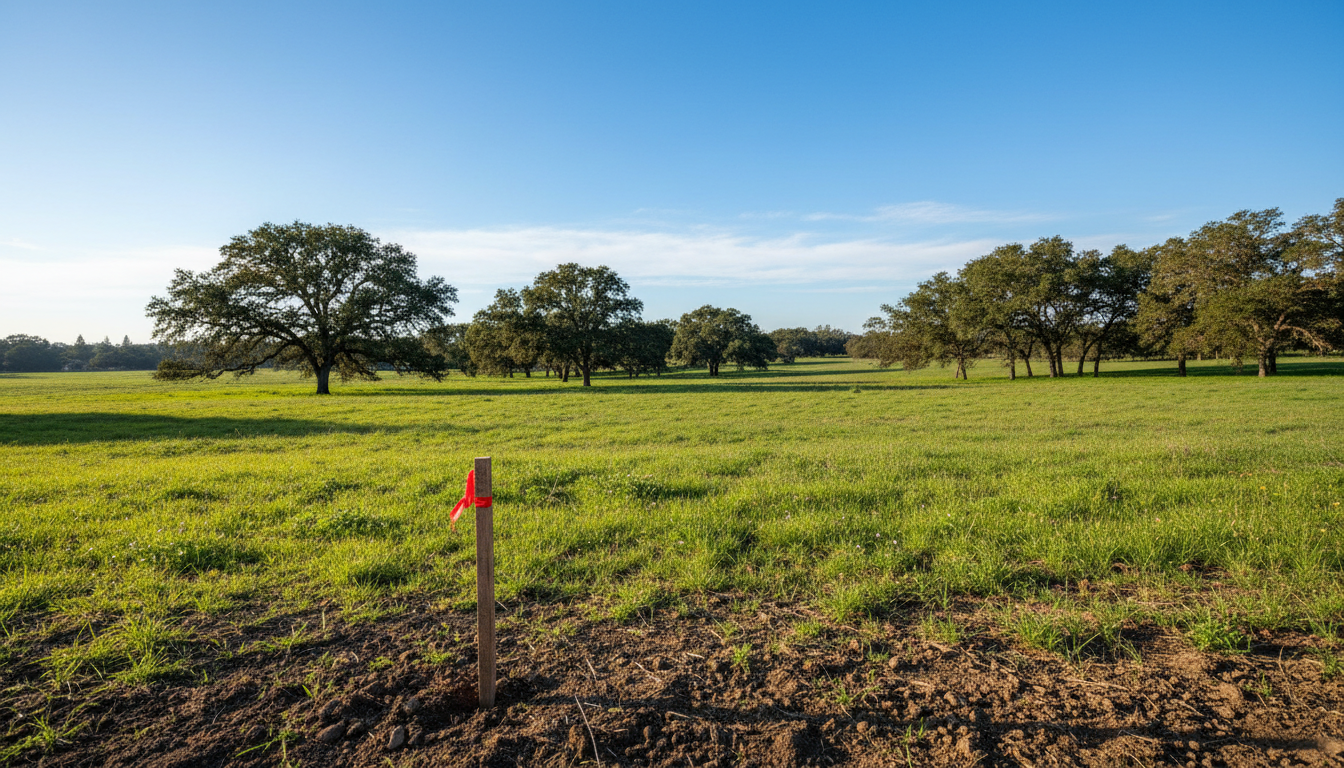
You sell the potential without ever promising it. Woodbridge REALTOR® Jeremiah Patterson markets split potential as a documented possibility rather than a guarantee, by gathering zoning, parcel size, access, water, and septic facts from San Joaquin County first, then targeting the small pool of buyers who actually value land they might one day divide.
The fear is that you either undersell the land because nobody noticed what it could become, or you oversell it, a buyer discovers the split is not feasible, and the deal blows up in escrow with your credibility attached. Both outcomes are avoidable with the same discipline, and here is how it works.
TL;DR: Never state that your parcel can be split. Feasibility depends on zoning, minimum parcel size, legal access, water and septic capacity, easements, and county approval, and only San Joaquin County can confirm it for a specific parcel. Your job is to assemble the factual record, present the possibility with clear language about what has and has not been verified, and market to the narrow group of buyers who pay for optionality. Use a licensed surveyor where boundaries or access are unclear.
What actually determines whether a parcel can be split?
Several things at once, and all of them have to work.
Zoning and the general plan. Your zoning designation sets what uses and densities are contemplated, with the county general plan above it. Agricultural and rural residential designations around Woodbridge often carry large minimum parcel sizes specifically to discourage fragmentation of farmland.
Minimum parcel size. Usually the first hard gate. If the minimum in your designation exceeds half your acreage, the conversation ends there.
Legal access. Every resulting parcel generally needs legal access to a public road. A shared driveway, an easement across a neighbor, or a long private lane can complicate or prevent a split.
Water. If the property is on a well, each new parcel needs a viable water source. Well capacity, water quality, and county requirements all come into play, and drilling a new well is not a formality.
Septic. Each new parcel needs a viable wastewater solution: soil suitability, adequate area for a system and a replacement area, and setbacks from wells, property lines, and waterways. County environmental health has the final word.
Williamson Act and agricultural contracts. Land under an agricultural preserve contract carries restrictions that can affect division. If your parcel is enrolled, that is a central fact.
Easements, utilities, and district facilities. Irrigation ditches, canals, and power or pipeline easements all constrain where lines can be drawn.
Because all of those interact, nobody can tell you from a map or a photo whether your land can be divided. San Joaquin County Community Development is the authority. Anyone else is speculating.
What can you say in the marketing, and what can you never say?
This distinction is worth more than any staging decision you will make.
Never say: "Can be split." "Splittable." "Two parcels." "Buildable second lot." "Approved for division." Each states as fact something only the county can determine, and if it turns out wrong you have a misrepresentation problem, not a marketing problem.
You can say: "Buyer to verify all development potential with San Joaquin County." "Seller makes no representation regarding division or development potential." "Acreage in a rural residential designation. Buyer to independently investigate zoning, minimum parcel size, access, water, and septic feasibility with the county."
You can also present facts: recorded acreage, the assessor's parcel number, the zoning designation shown on county records, road frontage, the well and its documented production if tested, the septic type and age, and any existing survey.
Facts, sourced and attributed, are persuasive. Claims are dangerous. A sophisticated land buyer knows the difference immediately, and the moment they see an unsupported claim they start discounting everything else in the listing.
If any of this feels like a fine line, have a licensed California real estate attorney review your language. This is not legal advice.
What documentation should you gather before listing?
Assemble a file. This is the single highest leverage thing you can do.
- The current assessor parcel map and legal description
- The zoning and general plan designations from county records
- Any existing survey, plat, or boundary work
- The well log, plus any recent flow test and water quality results
- The septic permit, system design, and service history
- Any recorded easements, access agreements, or road maintenance agreements
- Any Williamson Act or agricultural preserve contract documentation
- Utility service information, including whether power and district water reach the property lines
- Any prior parcel map application or correspondence with the county, even if abandoned
That last one matters more than sellers expect. If someone once explored a split and the county said no, that is a material fact that needs disclosing. Burying it does not make it go away.
What you should disclose when selling a Woodbridge home walks through the broader obligation, and it applies fully to land facts.
Should you pursue the split yourself before selling?
Usually not, but it depends on where you already are in the process.
Arguments against. Parcel map processes are long, expensive, and uncertain. Surveys, engineering, county review, conditions of approval, and improvement requirements that can include road work or utility extension all add up, and you can spend heavily and still end up with conditions that make the split uneconomic. Meanwhile your property sits off market.
Arguments for. If a split is genuinely feasible and finished parcels sell meaningfully stronger than one large parcel, entitlement can add real value. If you are already deep into an application with approvals in hand, finishing may beat abandoning.
The middle path most sellers should take. Do the cheap diagnostic work: a pre application meeting with San Joaquin County Community Development, a conversation with county environmental health about septic feasibility, and a review by a licensed surveyor or civil engineer. That tells you a great deal for a fraction of the cost of a full application, and lets you market with informed, carefully worded confidence while the buyer carries the entitlement risk.
Talk to a CPA before you decide. Subdividing land can carry tax consequences that differ substantially from selling a single parcel, and that is a question for a tax professional, not your agent.
How does split potential affect pricing?
Less mechanically than sellers hope, and more than skeptics assume.
Optionality has value, but the market discounts it heavily for risk and time. A buyer looking at unverified split potential prices in the entitlement cost, the probability of failure, the carrying cost, and the improvements the county might require. What is left is usually a fraction of what the seller imagined.
That said, credible potential expands your buyer pool upward. It brings in people who would not have looked at the property purely as a residence, and a wider top end tends to beat a single narrow use case.
Price from comparable sales of similar acreage in similar designations, adjusted for what your documentation supports. Not from a per lot arithmetic exercise. If you find yourself multiplying an imagined finished lot value by two, stop. What adds the most value before selling a home in Woodbridge covers the more reliable levers.
How do you market land potential to the right buyer?
This is the whole game on a parcel like yours.
The buyer for a Woodbridge property with split potential is not the buyer for a three bedroom home in town. They are a builder, a small developer, a multigenerational family looking to put two homes on one holding, a farmer expanding, or an investor who understands entitlement risk. Small, specific, geographically scattered. A generic MLS post reaches almost none of them.
Lead with the land, not just the house. Aerial photography, a parcel outline overlay, road frontage shown clearly, and a site sketch showing shape and access.
Give the documentation prominence. A downloadable packet with the parcel map, zoning designation, well and septic records, and easement information signals a serious seller.
Say what is unverified, clearly. Counterintuitively, explicit "buyer to verify with San Joaquin County" language builds trust with the exact buyer you want, who has been burned by sellers who overpromised.
Reach the buyer pool on purpose. Targeted outreach to builders and land investors, direct contact with agents who work land in San Joaquin County, and paid placement in front of the demographic that buys acreage. That is what the Master Listing Strategy is for. On a rural parcel the buyer pool is smaller and more specific than anything in town, so exposure has to be aimed rather than broadcast. Marketing creates demand. Price alone does not, and cutting the price on a property whose buyer never saw it accomplishes nothing.
Buying a home in Woodbridge and what to expect from lot sizes and home styles is useful context for how buyers here think about land.
Step by step: taking a splittable looking parcel to market
- Pull your assessor parcel map, legal description, and zoning designation from San Joaquin County records.
- Schedule a pre application conversation with San Joaquin County Community Development about minimum parcel size and process.
- Ask county environmental health about septic feasibility for any additional parcel.
- Collect your well documentation, including the log and any flow or quality testing.
- Have a licensed surveyor or civil engineer review access, boundaries, and easements if any are unclear.
- Check whether the parcel is under a Williamson Act contract or any other agricultural restriction.
- Assemble the packet and decide, with a CPA and an attorney if the stakes justify it, whether to entitle or sell as is.
- Write listing language that presents facts and disclaims conclusions, and invest in aerial and site photography that shows the land.
- Run a targeted campaign at builders, land buyers, and multigenerational families before the listing goes live.
Run this alongside the rural and semi rural Woodbridge guide covering wells, septic, and acreage, because the same systems that determine split feasibility determine how smoothly your sale closes.
Common Mistakes to Avoid
Advertising a split as a fact. The most expensive error available to you. Only the county can confirm feasibility, and a claim that proves wrong is a misrepresentation problem.
Assuming acreage alone is enough. Plenty of large parcels cannot be divided because of minimum parcel size, access, or septic constraints.
Hiding a prior denial. If the county previously said no, disclose it. It comes out during the buyer's investigation and looks far worse then.
Ignoring water and septic. These kill more theoretical splits than zoning does. Ask county environmental health early.
Pricing from imaginary finished lots. Buyers price entitlement risk aggressively. Anchor to comparable acreage sales instead.
Photographing only the house. On a land play the land is the product. Aerials and a parcel overlay are not optional, and most acreage listings skip both.
Marketing to residential buyers only. Your best buyer may not be looking for a house at all, and reaching them requires targeting, not broader exposure.
What This Looks Like in Real Life
A seller owns several acres outside Woodbridge with an older home near the road frontage and open ground behind it. They suspect it could be divided. Before listing they meet with San Joaquin County, learn the minimum parcel size in their designation, and find the acreage would technically support two parcels but that septic feasibility on the rear ground is unproven and access would require an easement. Rather than spending a year chasing it, they market with the facts documented, the constraints stated, and verification put on the buyer. Targeted outreach reaches builders and land buyers, and it sells to someone who intends to pursue the split knowing the hurdles.
A second scenario: a family owns a rural parcel where a prior owner once applied for a division and withdrew it. The seller finds the old file, discloses it up front, and includes the county correspondence in the marketing packet. The buyer's investigation confirms the same constraints, but because nothing was hidden there are no surprises and no renegotiation.
Neither scenario predicts yours. But the discipline holds: gather facts, claim nothing, disclose everything, and take the property to buyers who understand land.
Frequently Asked Questions
Can my Woodbridge property be split into two parcels?
Only San Joaquin County can answer that for your specific parcel. Feasibility depends on zoning, minimum parcel size, legal access, water and septic capacity, easements, and county approval. Start with San Joaquin County Community Development and county environmental health before you assume anything.
Should I advertise the property as having lot split potential?
Only with clear language putting verification on the buyer and disclaiming any representation, and never as approved or possible. Have a licensed California real estate attorney review your wording if the stakes are significant.
Is it worth getting the split approved before I sell?
Sometimes, but parcel map processes are long, costly, and uncertain, and conditions of approval can include expensive improvements. Most sellers do better with inexpensive diagnostic work, then selling with documentation and letting the buyer carry the entitlement risk.
Does a well or septic system limit whether land can be divided?
Frequently, yes. Each resulting parcel generally needs a viable water source and a viable wastewater solution with adequate area and setbacks. County environmental health is the authority on septic feasibility.
What is the Williamson Act and does it affect my sale?
It is a California program under which landowners contract to keep land in agricultural use in exchange for reduced property tax assessment. If your parcel is enrolled, the contract carries restrictions that can affect division. Verify enrollment with San Joaquin County and discuss implications with a licensed California real estate attorney and a CPA.
How much does split potential add to the price?
There is no reliable multiplier, and any number you have heard should be treated as unverified. Buyers discount unentitled potential heavily. Price from comparable sales of similar acreage and verify with a current market analysis for your address.
Ready to sell your Woodbridge property with land potential?
Document first, claim nothing, market deliberately. Three steps:
- Meet with San Joaquin County Community Development and county environmental health so you know what is possible before you write a word of marketing.
- Get a realistic value picture for the property as it stands today. Start with a free home evaluation.
- Build a targeted campaign aimed at builders, land buyers, and multigenerational families. Get in touch and we will walk the parcel, build the documentation packet, and map the launch.
Jeremiah Patterson is a REALTOR® and Vice President at Cornerstone Real Estate Group (CA DRE #02017640), with 220+ closed transactions and more than $87 million in San Joaquin County sales since 2016. His listings sell in a median of 13 days, with 55% under contract within 14 days, and he holds a 5.0 rating across 180 verified reviews (RateMyAgent 72, Realtor.com 61, Google 32, Yelp 15). He's a Move-Up Specialist and works with out-of-state, remote, and inherited/estate sellers as well as first-time buyers across Lodi, Stockton, Woodbridge, Acampo, Galt, and San Joaquin County. He was named RateMyAgent County Top 5 for San Joaquin County five consecutive years (2022-2026) and is a Lifetime Member of the Lodi Association of REALTORS® Masters Club. Reach him at (209) 329-7238 or jeremiah@sellingsanjoaquin.com.
Before you list, read the zoning and land use basics for Acampo properties and the rural and semi rural Woodbridge guide to wells, septic, and acreage. Woodbridge versus Lodi and which is right for you explains what your buyer is comparing.
Jeremiah Patterson Cornerstone Real Estate Group 224 W Pine St, Lodi, CA 95240 Phone (209) 329-7238 Email jeremiah@sellingsanjoaquin.com CA DRE #02017640 · Brokerage DRE #01037761 Practicing since 2016
Categories
Recent Posts

GET MORE INFORMATION