What Should You Know About Splitting an Acampo Parcel Before You Sell?
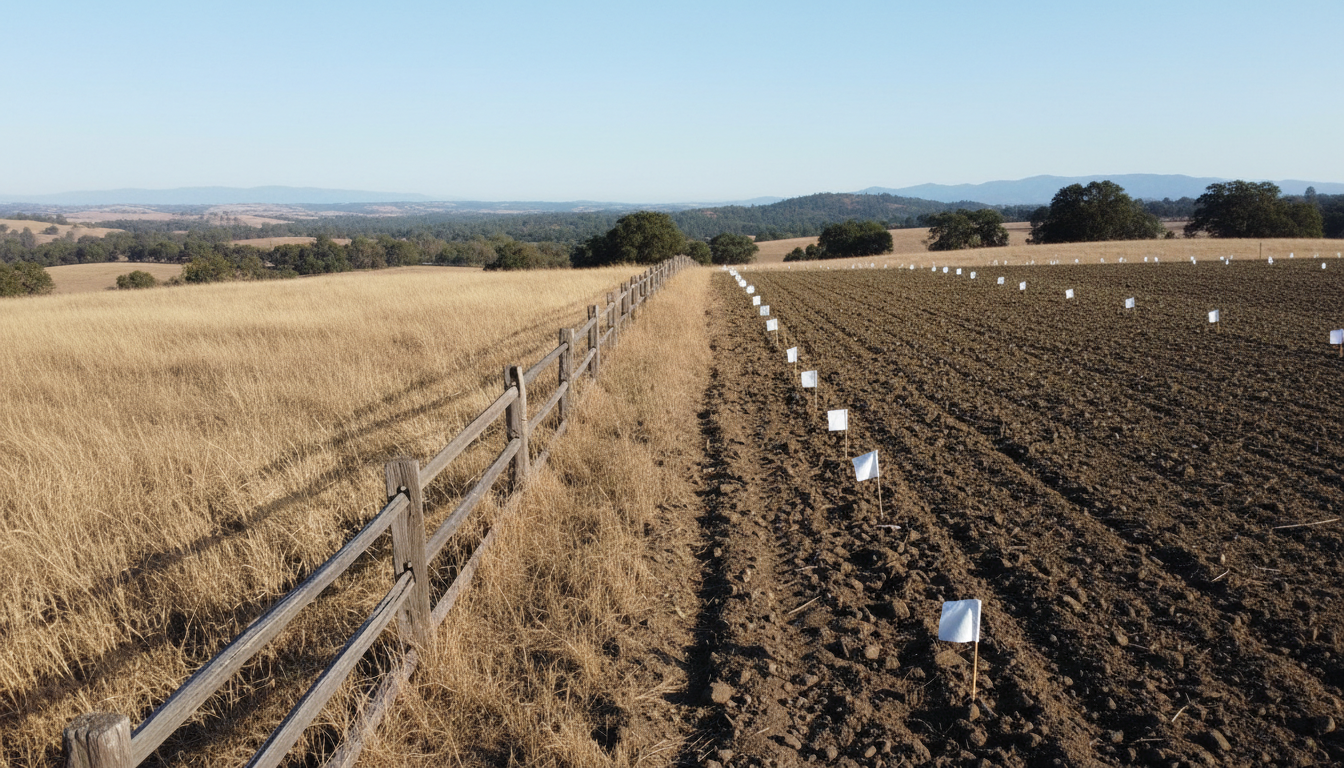
Whether an Acampo parcel can be split at all depends on zoning, minimum parcel size, Williamson Act status, road access, water, and septic capacity, plus San Joaquin County approval, and only the county can answer it for your land. Acampo REALTOR® Jeremiah Patterson helps owners find that out before a split ever shows up in marketing.
The temptation is easy to understand. You've got acreage, you've watched land values move, and the arithmetic in your head says two parcels are worth more than one. Sometimes that's true. Often it isn't, once you count the time, the cost, and the approvals. And occasionally the split simply isn't available on your land at any price.
TL;DR: No article can tell you whether your Acampo parcel can be divided. Split potential depends on zoning and minimum parcel size, Williamson Act contract status, legal road access, water availability, septic feasibility, and San Joaquin County approval, and the county is the only authority that can confirm it for a specific parcel. Marketing a property as splittable without written confirmation is a genuine risk to you. Before you assume anything, talk to San Joaquin County Community Development, a licensed surveyor or civil engineer, and a real estate attorney. Then decide whether pursuing a split before selling is actually worth the time it takes.
What does splitting a parcel actually mean?
Dividing land in California is a regulated process governed by state subdivision law and administered locally. Splitting one legal parcel into a smaller number of parcels and splitting it into many are different processes with different requirements, review paths, and timelines.
Whichever applies, the process generally involves an application to the county, a map prepared by a licensed surveyor or civil engineer, review by multiple county departments, conditions of approval, and a recorded map at the end. It's a land use entitlement, not a paperwork formality, and it's approved or denied on the merits of your parcel.
Two words matter here. "Legal parcel" means the land is recognized as its own parcel of record, which isn't always what an owner assumes from how the ground has been farmed or fenced for decades. "Conditions of approval" means an approval can arrive with requirements attached, sometimes expensive ones, that you have to satisfy before a map records.
What determines whether a split is even possible?
Several factors, all of which have to line up. Any one of them can stop the conversation.
Zoning and minimum parcel size. Agricultural zoning in San Joaquin County carries minimum parcel sizes, and they exist specifically to keep farmland in viable farming units. If a split would create parcels below the minimum for your zoning, it generally isn't available. The zoning and land use basics for Acampo properties covers how these designations work here.
Williamson Act status. If your parcel is under a Williamson Act contract, that's a significant additional layer, because the contract is an agreement to keep the land in agricultural use and the county administers it. Division of contracted land carries its own restrictions and requirements. This one alone can end the analysis.
Legal access. Every resulting parcel typically needs legal, permanent access to a public road. Not a dirt track used since the sixties, not a neighbor's driveway by handshake.
Water. Each new parcel needs a viable water supply. On rural Acampo ground that usually means a well, which raises questions about yield, quality, location, setbacks, and whether a new well can even be permitted on the proposed parcel.
Septic feasibility. Each parcel needs an approved way to handle wastewater. That typically means soil testing and Environmental Health review to confirm a suitable area exists with required setbacks from wells, property lines, and drainage. Soil that won't perc ends a split just as firmly as zoning does. Selling an Acampo property with a well and septic system explains how these systems are evaluated.
Everything else. Easements, flood zones, drainage, existing structures and their setbacks from a proposed new line, utility locations, agricultural buffers, and county policies you've never heard of.
Why can't you just advertise it as splittable?
Because if it turns out not to be, you've made a representation a buyer relied on when they decided what to pay.
This is one of the few places in a listing where an optimistic word carries real legal exposure. "Potential to split," "can be divided," "two parcels possible," all of it invites a buyer to price in value that may not exist. When they discover otherwise, whether during their own due diligence or after closing, you're the one who said it.
The safe version isn't silence, it's precision. Say what's confirmed and by whom, and say what isn't. "Buyer to independently investigate any division potential with San Joaquin County" is honest and costs you nothing with a serious buyer, who expects to do their own homework anyway.
If you actually want to market the split potential as value, get it confirmed in writing first, ideally with a county determination or an approved tentative map. Then it's not a claim, it's a document, and it genuinely supports price. What you should disclose when selling rural property in Acampo covers where the line sits.
Should you split before selling, or sell it whole?
Honest answer: usually sell it whole, unless the split is already well along.
The case for splitting first is that entitled, recorded parcels are worth more than a maybe, and you capture the value rather than handing it to a buyer. The case against is everything else. The process takes many months at minimum and often much longer. It costs real money for surveys, engineering, soil work, applications, and possibly improvements required as conditions. It can be denied. And while you're pursuing it, your land is off the market and your life is on hold.
There's a middle path that suits a lot of Acampo owners: do the investigation, not the entitlement. Get written county input, a surveyor's read, and clarity on water and septic feasibility, then sell with a documented picture of what a buyer might pursue. Buyers pay for reduced uncertainty even when it isn't a guarantee.
Which path fits depends on your timeline, your tolerance for cost and risk, and frankly on your age and energy. Owners who are winding down, and there are plenty here who've farmed the same ground for decades, are often better served selling whole and moving on. Retiring in Acampo is worth reading if that's the season you're in.
How does split potential change the marketing?
It changes who your buyer is, which is the whole ballgame on rural land.
A parcel with confirmed division potential attracts a different audience than a straightforward ranch or vineyard: builders, land investors, families planning a second homesite. A parcel without it attracts growers, neighbors, and lifestyle buyers. Those are separate groups reached in separate ways, and putting a listing in front of the wrong one produces silence.
Here's what I want you to take from this: price alone does not create demand for land. The buyer pool for rural and agricultural parcels is small and specific, and generic MLS exposure will not find a vineyard buyer or a land investor. It will find a lot of people who are curious. That's why the Master Listing Strategy on a parcel like yours means aerial and drone work that shows boundaries, access, plantings, and water, a documented property package a serious buyer can actually underwrite, and direct outreach to neighboring landowners, growers, ag brokers, builders, and the lenders who finance land. Neighbors are frequently the strongest buyer on Acampo acreage, and they're never found by waiting.
It also helps to understand the mindset on the other side of the table. Buying land or a rural property in Acampo is essentially your buyer's due diligence list, and how financing works for rural or agricultural property in Acampo explains why their loan options are narrower than a homebuyer's.
Step by step: investigating split potential before you list
- Confirm what you actually own. Assessor's parcel numbers, legal description, and whether the land is one legal parcel or several. Owners are wrong about this more often than you'd think.
- Call San Joaquin County Community Development. Ask about zoning, minimum parcel size, the applicable division process, and any policies affecting your area. Get names and take notes.
- Check Williamson Act status with the county. If a contract is recorded against the land, that changes everything downstream and belongs in front of a real estate attorney.
- Bring in a licensed surveyor or civil engineer. They'll tell you whether a workable configuration exists on the ground, where lines could go, and what access and setbacks would require.
- Investigate water and septic feasibility. Well capacity and permitting, soil evaluation, and San Joaquin County Environmental Health requirements for any new parcel.
- Get a real estate attorney's read. Especially on access, easements, contract restrictions, and how you may and may not describe any of it in marketing.
- Price out the whole path. Survey, engineering, application, soil work, conditions of approval, and the months involved. Then compare it honestly to selling now.
- Decide, and build the listing around the decision. Either market a documented entitlement, or market the land accurately with a clean investigation file for the buyer.
Common Mistakes to Avoid
Assuming acreage equals divisibility. Plenty of large Acampo parcels can't be split at all. Size is one factor among many, and minimum parcel sizes in ag zoning exist precisely to prevent it.
Repeating what a neighbor did. Their parcel had different zoning, different access, different soil, possibly a different contract status, and possibly a different set of rules at the time. It tells you nothing reliable about yours.
Advertising split potential before it's confirmed. This is the expensive one. Get it in writing from the county or don't put it in the listing.
Forgetting the Williamson Act. If a contract is recorded against your land, it's not a footnote. It's a threshold question that can end the analysis before it starts.
Ignoring water and septic. A configuration that works beautifully on a map fails immediately if the soil won't support a system or a well can't be permitted where it needs to go.
Taking a verbal maybe as a yes. A friendly counter conversation is a starting point, not an approval, and surveys, engineering, and conditions of approval add up fast. Written confirmation is what you and your buyer can rely on.
What This Looks Like in Real Life
An owner with a sizable planted parcel outside Acampo is convinced he can carve off a homesite for a family member and sell the rest. The county conversation turns up a minimum parcel size that makes the configuration he had in mind unworkable, and a recorded contract on the land adds another layer entirely. Disappointing, but he learned it in a couple of weeks for the cost of some phone calls and a surveyor's consultation, not after eight months and a stack of engineering invoices. The property gets listed accurately as one parcel and marketed to growers and neighboring landowners, where the real demand was all along.
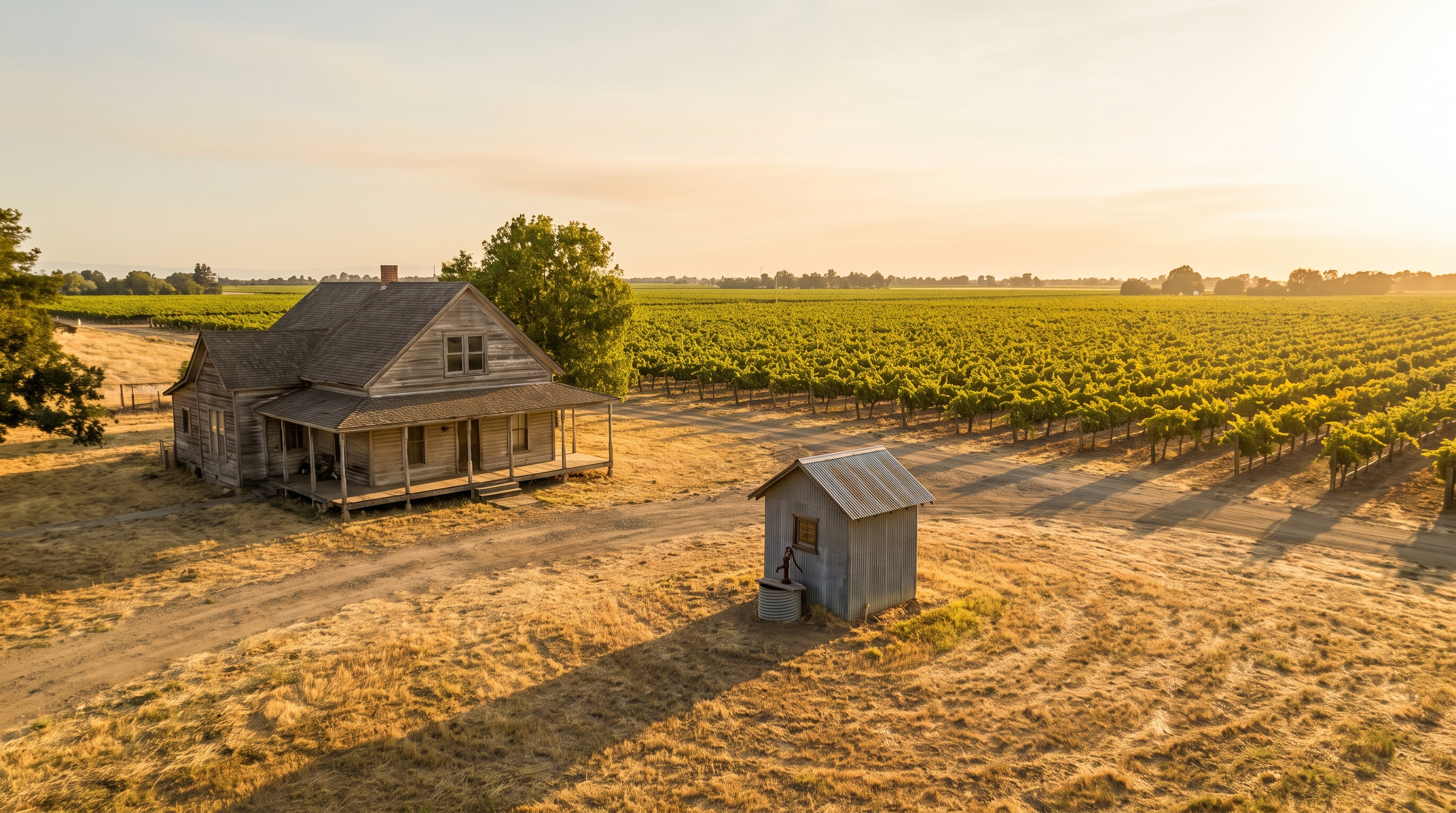
A second case: a family inherits acreage with an old farmhouse and wonders whether to split before selling. The investigation suggests a division might be feasible, but the timeline runs long and the family wants to be done. So they document everything they learned, county contacts, surveyor notes, soil and water information, and hand that file to buyers with clear language that any division potential is unconfirmed and subject to county approval. A land buyer takes it from there. They didn't capture the full entitlement value, and they didn't spend a year chasing it. That was the right trade. If your property came through an estate, selling an inherited home or ranch in Acampo covers that ground.
Frequently Asked Questions
Can I split my Acampo parcel?
Nobody can answer that from the outside. It depends on zoning and minimum parcel size, Williamson Act status, legal access, water, septic feasibility, and county approval. San Joaquin County Community Development is the only authority that can confirm it for your specific parcel, and a licensed surveyor or civil engineer can tell you whether a workable configuration exists on the ground.
Is it worth splitting before I sell?
Sometimes, rarely quickly. Entitled parcels can be worth more than unconfirmed potential, but the process takes many months, costs real money, and can be denied. Many Acampo owners do better selling whole with a well documented investigation file and letting a land buyer pursue the entitlement.
Can I advertise my property as having split potential?
Not unless it's confirmed in writing. Marketing land as splittable when it turns out not to be is a real risk, because buyers price on that representation. Accurate alternative language directs buyers to investigate division potential independently with the county.
Does a Williamson Act contract stop a split?
It's a major factor and it can. The contract commits the land to agricultural use and the county administers it, so dividing contracted land carries its own restrictions. Confirm status with San Joaquin County and take the question to a real estate attorney.
How long does a parcel split take in San Joaquin County?
Longer than owners expect, and it varies by process type, parcel conditions, and how many county departments weigh in. Plan in terms of many months at minimum, with conditions of approval potentially extending it. Ask the county about current timelines for your situation.
Who do I need on my team to investigate this?
San Joaquin County Community Development for zoning and process, county Environmental Health for water and septic, a licensed surveyor or civil engineer for the map and the physical realities, a real estate attorney for access and contract questions, and your agent to turn all of it into a marketing decision.
Ready to figure out what your Acampo land is really worth?
Split potential is worth investigating and dangerous to assume. Three steps:
- Call San Joaquin County Community Development this week and get zoning, minimum parcel size, and Williamson Act status in writing.
- Have a licensed surveyor or civil engineer walk the parcel and tell you whether a workable configuration exists before you spend anything else.
- Get a clear read on what the land is worth as it sits with a free home evaluation, then get in touch and we'll build the Master Listing Strategy around whichever path pencils out.
Jeremiah Patterson is a REALTOR® and Vice President at Cornerstone Real Estate Group (CA DRE #02017640), with 220+ closed transactions and more than $87 million in San Joaquin County sales since 2016. His listings sell in a median of 13 days, with 55% under contract within 14 days, and he holds a 5.0 rating across 180 verified reviews (RateMyAgent 72, Realtor.com 61, Google 32, Yelp 15). He's a Move-Up Specialist and works with out-of-state, remote, and inherited/estate sellers as well as first-time buyers across Lodi, Stockton, Woodbridge, Acampo, Galt, and San Joaquin County. He was named RateMyAgent County Top 5 for San Joaquin County five consecutive years (2022-2026) and is a Lifetime Member of the Lodi Association of REALTORS® Masters Club. Reach him at (209) 329-7238 or jeremiah@sellingsanjoaquin.com.
Before you list acreage, read the zoning and land use basics for Acampo properties and what you should disclose when selling rural property in Acampo. If you're weighing improvements alongside the land question, what adds the most value before selling a home in Acampo will help you spend where it counts.
Jeremiah Patterson
Cornerstone Real Estate Group
224 W Pine St, Lodi, CA 95240
Phone (209) 329-7238
Email jeremiah@sellingsanjoaquin.com
CA DRE #02017640 · Brokerage DRE #01037761
Practicing since 2016
Categories
Recent Posts

GET MORE INFORMATION