What Should You Disclose About Irrigation District Assessments in Woodbridge?
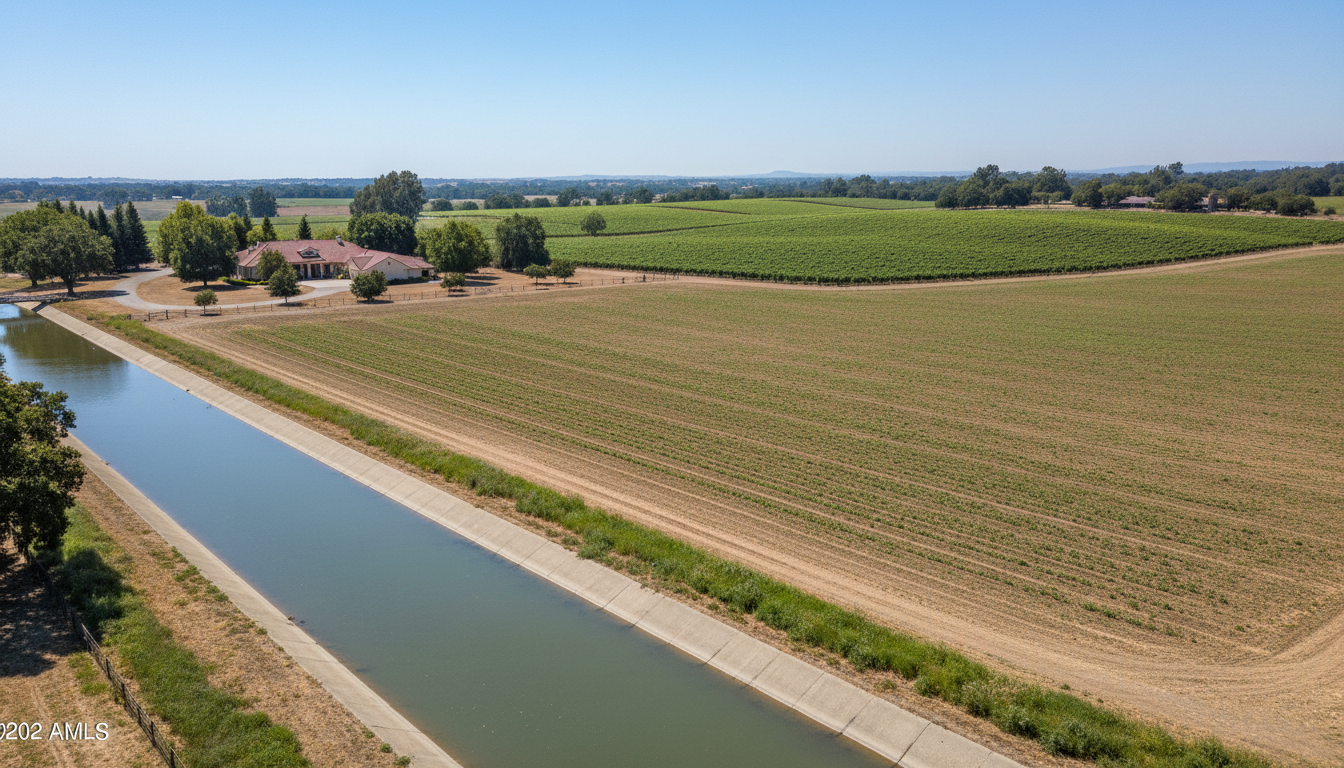
Disclose every assessment, charge, or special district line item you know about, along with the district involved, the water delivery arrangement, and any ditch or easement crossing the land. Woodbridge REALTOR® Jeremiah Patterson has sellers verify the current tax bill and confirm the details directly with the district before the listing ever goes live.
The worry underneath this is that a buyer finds a charge you did not mention and decides you were hiding something, or that a recurring assessment scares off a willing buyer at the worst possible moment. Both problems have the same solution, and it is not silence. Here is what to gather and how to present it.
TL;DR: Special district assessments around Woodbridge can include irrigation, reclamation, drainage, flood control, and other service districts, and they show up on the property tax bill as separate line items. You must disclose what you know, and California's transfer disclosure process asks about special assessments. Never state an amount from memory. Pull the current tax bill, contact each district in writing, and let the buyer verify independently. Only the district and the county can confirm amounts for your address.
What are these districts and why does your parcel have them?
Because agriculture in this valley runs on managed water, and managed water runs on organized districts.
The land around Woodbridge sits in a part of San Joaquin County shaped by the Mokelumne River, by generations of irrigation infrastructure, and by levee and drainage systems built to make the ground farmable. Several kinds of public agencies operate here. Irrigation districts deliver surface water, maintain canals and ditches, and levy charges on parcels within their boundaries. Reclamation and drainage districts maintain levees, pumps, and drainage facilities, and assess parcels that benefit. Flood control and water agencies operate at a broader scale and may also levy charges, and community services, lighting, and other special districts may apply depending on where exactly the parcel sits.
Which apply to your parcel depends on district boundaries, and boundaries do not follow city limits or subdivisions. Two properties a quarter mile apart can be in different districts entirely. You cannot determine this from a website map or from memory. County records and the districts themselves are the authority. Living near the Mokelumne River in Woodbridge explains the wider water context your buyer is stepping into.
What exactly do you have to disclose?
Everything material that you know, and more than you probably think.
California sellers carry broad disclosure obligations covering conditions that affect the value or desirability of a property, and the standard transfer disclosure process specifically asks about special assessments and bonds.
Practically, put the following in the file:
- Every special district appearing on your current property tax bill, by name
- Any assessment or bond that runs with the property
- Whether the property receives irrigation water and under what arrangement
- Any water right, share, allotment, or delivery contract tied to the parcel
- Any ditch, canal, pipeline, or drainage facility crossing or bordering the property
- Any easement in favor of a district, and any district rules limiting what you can build, plant, or store near a facility
- Any correspondence, notice, or violation you have received from a district
- Any past or pending assessment increase, capital project, or bond measure
- Any dispute with a district, and any deferred or delinquent charge
Write it all down even where it seems routine. What you should disclose when selling a Woodbridge home covers how these items fit alongside the rest of your package. If any part of your obligation is unclear, ask a licensed California real estate attorney. This is not legal advice.
How do you find out what actually applies to your parcel?
Four sources, in this order.
Your current property tax bill. Special assessments appear as separate line items below the general ad valorem tax, usually with a district name and often a phone number. Pull the most recent bill.
The San Joaquin County Assessor and Tax Collector. They confirm what is being levied against your parcel number and by whom.
The districts themselves. Call or write each district on the bill. Ask what the charge covers, whether it is fixed or usage based, whether any bond is outstanding, whether an increase is contemplated, and whether the parcel carries any water right or delivery entitlement. Get it in writing.
Your title company. The preliminary title report shows recorded easements, and a district facility crossing your land usually appears there.
The natural hazard disclosure report prepared in most California transactions also addresses certain special districts. A cross check, not a substitute.
Why should you never quote an amount?
Because assessments move, and a wrong number is worse than no number.
Assessment amounts vary by district, parcel, acreage, land use classification, and year. Bonds retire, capital projects get approved, rates get adjusted. A figure you remember from a bill two years ago has a good chance of being wrong today, and if a buyer relies on it you have created a problem that did not need to exist.
Hand the buyer the source documents and let them verify. "The property is within the following districts, per the attached current tax bill. Buyer to verify all amounts and terms directly with each district and with the San Joaquin County Tax Collector." Complete, honest, and safe. The same applies to any general number you have heard about assessments around here. Treat it as unverified.
What about water rights, ditches, and easements?
This is where the real value and the real risk both live.
Water delivery can be an asset. Access to district irrigation water is meaningful to a buyer who intends to farm, run animals, keep a vineyard, or maintain pasture. Document the arrangement precisely, and describe it only in terms the district would confirm.
Ditches and canals carry legal consequences. A district facility crossing the property typically carries an easement, maintenance access rights, and restrictions on what can be built or planted within the easement area. Buyers need to know where it runs, because that affects buildability for a shop, a second dwelling, or a pool. The zoning and land use basics for nearby Acampo properties shows how rural constraints stack up in this part of the county.
Water rights are their own legal area. Whether a right, share, or allotment transfers, and on what terms, is a question for the district and for a licensed California real estate attorney with water law experience. Do not characterize a water right in marketing based on your own understanding of it. Groundwater regulation is separate again: if irrigation depends on a well, direct the buyer to the applicable groundwater sustainability agency and San Joaquin County rather than summarizing it yourself.
Do assessments actually hurt what the property sells for?
Less than sellers fear, and mostly through the payment, not the label.
A recurring assessment is a cost, and it affects the buyer's total monthly obligation. But rural buyers here generally expect special districts, because they are a normal feature of owning land near a managed water system. What they do not forgive is finding out late.
There is also an upside case sellers routinely fail to make. An assessment on a parcel with actual water delivery is the reason the pasture is green and the ground supports what the buyer wants to do. As a bare line item it reads as an expense. Alongside what it delivers, it reads as infrastructure. That framing is a marketing decision worth making deliberately.
How does this fit into marketing the property?
It belongs in the campaign, not buried in a disclosure packet nobody reads until day twelve.
Rural properties around Woodbridge draw a smaller and more specific buyer pool than homes in town. Small farmers, hobby farmers, horse people, buyers who want space and accept the complexity that comes with it. That group is not put off by a district assessment, and many are actively looking for parcels with reliable water. Generic exposure will not find them, and generic exposure is what most rural listings get. The Master Listing Strategy on a parcel like this means:
Putting the water story in the marketing. What the property receives, under what arrangement, and what it supports, in verified terms with the district named and verification left to the buyer.
Publishing the district list up front. A seller who leads with the districts and the current tax bill is nobody's suspect, and that builds a negotiating position that survives due diligence.
Showing the land as productive. Photograph the irrigated ground, the pasture, the orchard rows, the ditch. If the water works, show what it produces.
Targeting buyers who value delivered water. Reaching them takes deliberate outreach rather than a listing post and hope. Marketing creates demand. Price alone does not, and no discount ever put a listing in front of a buyer who never saw it.
The rural and semi rural Woodbridge guide to wells, septic, and acreage is the companion piece, because water in, water out, and water across are usually all one conversation on a parcel like yours.
Step by step: getting your district disclosures right
- Pull your most recent property tax bill and list every line item below the general tax.
- Call the San Joaquin County Tax Collector to confirm what is currently levied against your parcel number.
- Contact each district in writing about what the charge covers, whether any bond is outstanding, and whether an increase is contemplated.
- Ask each district about water rights, allotments, or delivery entitlements, and get the answer in writing.
- Order a preliminary title report early and read the easements section carefully.
- Walk the property and locate every ditch, canal, pipe, and headgate, noting where each easement runs and what it restricts.
- Gather any notices, violations, or correspondence from any district.
- Assemble a district packet with the tax bill, district responses, title report, and a simple map of facilities and easements.
- Write your disclosures completely, naming districts and directing the buyer to verify all amounts independently, then build the water story into the marketing.
Common Mistakes to Avoid
Quoting an assessment amount from memory. Amounts change, and a wrong figure a buyer relies on is a real problem. Attach the current bill and let the buyer verify.
Assuming the buyer will figure it out from the tax bill. Some will not until escrow, and then it is a renegotiation.
Not knowing which districts apply. District boundaries are not intuitive. Confirm with the county rather than assuming your parcel matches a neighbor's.
Overlooking a facility crossing the land. A ditch or pipe you have stopped noticing is an easement with rules attached.
Describing a water right you have not verified. Water rights are a legal specialty. Get the district's written characterization before you put anything in marketing, and route the buyer to a licensed California real estate attorney.
Hiding a delinquency or a dispute. These surface through title and through the district. Late discovery costs far more than early disclosure.
Treating the assessment as purely a negative. If the district delivers water that makes the land productive, say so.
What This Looks Like in Real Life
A seller owns a few acres outside Woodbridge with pasture, a stand of trees, and a ditch along one boundary. Before listing they pull the current tax bill and find several special district line items they had never really examined. They call each district, get written answers about what the charges cover and whether bonds are outstanding, and confirm the irrigation delivery arrangement. The title report shows the district easement along the ditch. All of it goes into a packet attached to the listing with a simple map, and the marketing describes the water delivery and shows the irrigated ground in summer. Buyers arrive already knowing the cost and understanding what it buys.
A second scenario: a seller receives a district notice about a planned capital project during the listing period. Rather than waiting to see whether it comes up, they disclose it immediately, attach the notice, and direct buyers to the district for timing. One buyer walks. The buyer who proceeds does so with full information and never revisits it.
Neither scenario predicts your outcome. But the discipline holds: verify with the source, disclose completely, quote no amounts, and present the water as the infrastructure it is.
Frequently Asked Questions
What are irrigation district assessments and why are they on my tax bill?
They are charges levied by a public district on parcels within its boundaries to fund water delivery, canal and levee maintenance, drainage, or related infrastructure. They appear as separate line items below the general tax. The district and the San Joaquin County Tax Collector can confirm what applies to your parcel.
Do I have to disclose special district assessments when selling?
Yes. California's transfer disclosure process asks about special assessments and bonds, and your general obligation covers anything material you know. Name the districts, attach the current tax bill, and direct the buyer to verify amounts independently.
How much are irrigation assessments in Woodbridge?
Amounts vary by district, parcel, acreage, land use, and year, and no general figure is meaningful. Pull your current tax bill and contact each district directly. Any number from a neighbor or a website should be treated as unverified for your address.
Do water rights transfer with the property?
It depends entirely on the nature of the right, share, or allotment and on district rules. Do not assume, and do not characterize it in marketing until the district confirms it in writing. Review it with a licensed California real estate attorney who handles water matters.
Will an assessment make my property harder to sell?
Usually not, if it is disclosed early and presented in context. Rural buyers here expect special districts. What damages a sale is a charge discovered in escrow that the seller never mentioned.
Ready to sell your Woodbridge property with the district questions settled?
Verify, document, disclose. Three steps:
- Pull your current tax bill and contact each district in writing, so every charge and easement is documented before anyone writes an offer.
- Get a value picture that accounts for the land, the water delivery, and the assessments. Start with a free home evaluation.
- Build a campaign that tells the water story and targets buyers who value delivered irrigation. Get in touch and we will walk the parcel, assemble the district packet, and map the launch.
Jeremiah Patterson is a REALTOR® and Vice President at Cornerstone Real Estate Group (CA DRE #02017640), with 220+ closed transactions and more than $87 million in San Joaquin County sales since 2016. His listings sell in a median of 13 days, with 55% under contract within 14 days, and he holds a 5.0 rating across 180 verified reviews (RateMyAgent 72, Realtor.com 61, Google 32, Yelp 15). He's a Move-Up Specialist and works with out-of-state, remote, and inherited/estate sellers as well as first-time buyers across Lodi, Stockton, Woodbridge, Acampo, Galt, and San Joaquin County. He was named RateMyAgent County Top 5 for San Joaquin County five consecutive years (2022-2026) and is a Lifetime Member of the Lodi Association of REALTORS® Masters Club. Reach him at (209) 329-7238 or jeremiah@sellingsanjoaquin.com.
Before you list, read what you should disclose when selling a Woodbridge home and the rural and semi rural Woodbridge guide to wells, septic, and acreage, since district water and on site systems get evaluated together. Living near the Mokelumne River in Woodbridge is the context your buyer already finds appealing.
Jeremiah Patterson
Cornerstone Real Estate Group
224 W Pine St, Lodi, CA 95240
Phone (209) 329-7238
Email jeremiah@sellingsanjoaquin.com
CA DRE #02017640 · Brokerage DRE #01037761
Practicing since 2016
Categories
Recent Posts





GET MORE INFORMATION