What Happens When the Sewer Lateral Fails Inspection on a Lodi Sale?
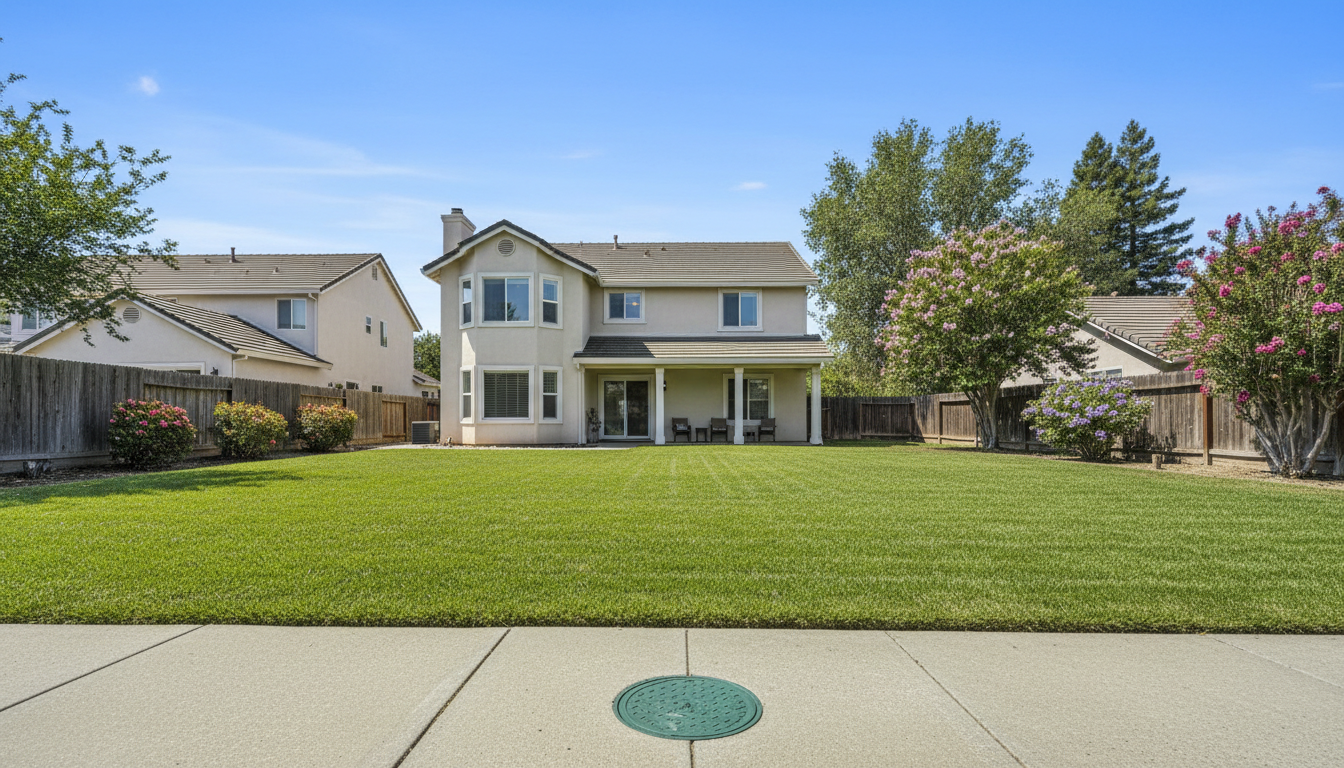
When a sewer lateral fails inspection during a Lodi escrow, you keep the deal together by getting a licensed plumber's camera footage and written bid within days, confirming what the City of Lodi requires, and negotiating from documented scope. Lodi REALTOR® Jeremiah Patterson treats a failed lateral as a timeline problem, not a dead sale.
The fear underneath this is specific, and it's fair. You're picturing a backhoe in your front yard, your landscaping gone, the sidewalk cut, a permit process you don't understand, and a buyer who's already halfway out the door. Meanwhile you may have a replacement property lined up and a closing date you can't move.
Here's what usually happens instead. The scope turns out narrower than the first phone call suggested, the work takes days rather than weeks, and the deal closes with a short extension. Which version you get depends almost entirely on how fast you move in the first seventy-two hours.
TL;DR: A failed sewer lateral is a common, solvable escrow item. Get your own licensed plumber to camera the line and produce footage plus a written bid immediately, verify with the City of Lodi what's required for your property, then present the buyer with facts and a proposal at the same time. Sellers who control the scope and the timeline keep their price. Sellers who go quiet fund the buyer's worst-case estimate.
What Is the Sewer Lateral, and Why Does It Get Inspected?
The sewer lateral is the private pipe carrying waste from your house out to the public sewer main, usually running under the front yard and often under the sidewalk or curb. The house side belongs to the property. Where responsibility shifts to the city depends on local rules, and that boundary is worth pinning down with the City of Lodi directly.
On older Lodi homes, that pipe can be clay, cast iron, Orangeburg, or materials spliced together over decades of partial repairs. Roots find clay joints. Cast iron corrodes. Orangeburg deforms. It's what happens to buried pipe over fifty or eighty years. And buyers increasingly order a sewer scope as a separate inspection, so an item that used to surface after closing now surfaces during your contingency period, on video, with a timestamp.
What Does a "Failed" Sewer Scope Actually Mean?
The word covers an enormous range, and the range is the whole story.
At the mild end: root intrusion at a joint, grease and scale buildup, or a partial blockage. Often cleared with hydro jetting or a mechanical clean, followed by a re-scope to confirm the line is clear. Sometimes that's the entire fix.
In the middle: a bellied section holding water, an offset joint, a cracked segment, or a bad prior repair. Depending on location and severity, these can sometimes be handled with a spot repair or a trenchless liner rather than a full dig.
At the serious end: a collapsed line, a lateral separated from the main, or a run failing along most of its length. That's a replacement, and it's the version everyone pictures the moment they hear the word "sewer."
Those three outcomes look nearly identical in a one-line summary on an inspection report. They're completely different problems with completely different costs. Your first job isn't to negotiate. It's to find out which one you have.
Who Pays for a Sewer Lateral Repair in a Lodi Sale?
There's no rule. It's negotiated every time, and what your purchase agreement says matters more than what's customary. Local practice in San Joaquin County often has the seller delivering functioning systems at close, but that's a norm, not a law. Some lenders won't fund on a property with a known sanitary defect, which can remove "just credit them" from the menu entirely.
Your options generally look like this.
Repair and re-scope before close. Best protection for your price. Costs cash up front, and you control the contractor.
Credit at close. Faster, but you almost always pay a premium, because the buyer pads the number for everything they don't know. Confirm the lender allows it first.
Escrow holdback. Funds held after closing so the deal can close on time while the work gets done. Availability depends on the lender. Ask early.
Price reduction. The bluntest tool, usually deployed too soon. Reduce before you have a bid and you're negotiating against a number nobody verified.
Let the buyer walk and re-list with the work done. Sometimes correct, particularly if the buyer was shaky on other items.
For legal responsibility under your specific contract, talk to a California real estate attorney. For what the City of Lodi requires on your parcel, call the City.
Why Does Speed Matter So Much Here?
Because the gap between the report and your response gets filled by someone else.
The moment the buyer's plumber says "the line has issues," a clock starts. Take a week to respond and the buyer's agent has spent that week collecting worst-case numbers while the buyer reads horror stories. By the time you arrive with facts, you're arguing against a position that has already hardened. Show up in three days with camera footage, a written scope, a bid, a timeline, and a proposal, and you're not arguing at all. You're the person who solved it.
Information beats fear, and fear is what costs you money. Dropping the price answers none of the buyer's questions. A video of a cleared line answers all of them.
How Does This Connect to Marketing and Price?
More directly than most sellers expect.
A house that went under contract at a strong number in its first two weeks has room to absorb an escrow item like this, because you negotiated from a position of demand. A house that sat, got stale, and finally caught one lukewarm offer has no room at all. That buyer knows they're the only one, and they'll use the sewer report to reprice the whole deal.
That's the Master Listing Strategy in a paragraph. Marketing creates demand. Demand creates leverage. Leverage is what you spend when something unexpected shows up in escrow, and something almost always does. If you're earlier in the process, why most offers arrive in the first fourteen days explains where that leverage comes from.
It also argues for scoping the lateral yourself before listing. A pre-listing scope costs a fraction of a mid-escrow renegotiation and converts a surprise into a disclosed, priced-in known. The difference between a pre-listing inspection and a buyer's inspection in Lodi covers why the same finding lands so differently depending on who ordered the report.
What Do You Have to Disclose About the Lateral?
Anything you know. That includes the failed scope, prior backups, prior root clearing, the plumber you called two winters ago, and any repair done without a permit.
And once you have the buyer's report, you know. If this deal falls apart, the condition follows the property to the next buyer as a known material fact. Sellers who grasp that usually fix it properly the first time, because they realize they aren't choosing between fixing it and not fixing it. They're choosing between fixing it now and fixing it later with less leverage. Disclosure specifics belong with a California real estate attorney, but the practical mechanics are covered in what you should disclose when selling a Lodi home.
How It Works: The Step by Step
-
Get the actual video, not the summary. Ask for the full camera footage and the plumber's notes, then have the inspector point out the specific footage marks where the problems are.
-
Call your own licensed plumber within twenty-four hours. Someone who does laterals routinely, pulls permits, and can camera the line independently. Not a general handyman.
-
Get a written scope and bid. With a timeline and a method: clean and re-scope, spot repair, trenchless liner, or open trench replacement. This document is your negotiating position.
-
Call the City of Lodi about requirements and permits. What applies to your address, where city responsibility begins, and whether sidewalk or right-of-way work triggers extra review. Get it from the City, not a forum.
-
Confirm with the buyer's lender what's allowed. Ask whether a credit or holdback is acceptable, or whether the work must be completed before funding. Get it in writing before you propose anything.
-
Decide your position in advance. What you'll pay for, what you won't, your extension tolerance, and where you'd rather let the buyer go. Decide it calmly, not in a text thread at ten at night.
-
Present facts and proposal together. Video, scope, bid, timeline, permit path, and your offer, in one package.
-
Book the work and the re-scope in the same call. The re-scope is the step everyone forgets, and it produces the document escrow actually needs.
-
Deliver the final footage, permit, and invoice to escrow. Now it's documented for this buyer and anyone who ever asks again.
Common Mistakes to Avoid
Waiting to hear what the buyer wants. Every day of silence transfers leverage, and the buyer's side is not building a case in your favor.
Accepting the buyer's plumber's estimate. Buyer-side quotes on laterals run high, often by a wide margin, and they're usually a single bid from a company with no incentive to be conservative.
Assuming the worst method. People hear "sewer" and picture a trench across the yard. Ask your plumber whether a spot repair, a liner, or a clean and re-scope handles it. Sometimes it does.
Skipping the permit. Unpermitted lateral work is a disclosure item forever and a red flag to the next buyer's inspector.
Treating it as a price problem. A completed repair with fresh footage is worth more to a buyer than a credit, because the credit leaves them holding the risk and the contractor search.
Cleaning the line and calling it fixed without a re-scope. No confirming footage means no proof, and you'll have the argument again at the final walkthrough.
What This Looks Like in Real Life
Scenario one. A seller with a 1940s home near downtown Lodi gets a buyer's sewer scope flagging root intrusion and a partial blockage, and the buyer's agent opens with a large credit request. The seller has their own licensed plumber camera the line within two days. The line is clay, the roots are at two joints, and the recommended fix is hydro jetting plus a spot repair rather than a replacement. The work is permitted and done inside a week, and the re-scope footage goes to the buyer with the invoice. The credit request disappears, and the deal closes on the original price with a short extension.
Scenario two. A different seller in east Lodi gets a far worse report: deformed Orangeburg and a lateral failing along a long run. A genuine replacement. The seller gets two bids, verifies the permit path with the City of Lodi, and offers the buyer a choice: complete the replacement before close on a defined timeline, or take an agreed credit and handle it themselves. The buyer picks the completed repair, and the transaction closes about two weeks late. The seller paid for the work, but paid their contractor's number instead of the buyer's, and kept the sale price intact.
Frequently Asked Questions
Does the City of Lodi require a sewer lateral inspection or repair before a sale?
Requirements vary by jurisdiction and can change, so the only reliable answer comes from the City of Lodi directly for your address. Call and ask what applies, where city responsibility begins, and what permits any work would require. Don't rely on what a neighbor did five years ago.
How much does a sewer lateral repair cost in Lodi?
There's no honest single number, and the spread is enormous. A clean and re-scope, a spot repair, a trenchless liner, and a full open-trench replacement under a sidewalk are four very different jobs. Get a written bid from a licensed plumber and treat online averages as noise.
Can I just give the buyer a credit instead of doing the work?
Sometimes. It depends on the lender, the loan type, and the severity. Sanitary defects are exactly the category some lenders refuse credits for, because they want the collateral functional at funding. Ask the loan officer and get the answer in writing.
Should I scope the lateral before I list?
On an older Lodi home, usually yes. It converts a potential mid-escrow crisis into a known item you can price, disclose, or repair on your own schedule, and it removes the buyer's ability to use surprise as leverage. That's part of the broader question in what to fix before selling in Lodi.
How long does the repair usually take?
It depends on method and permitting. A clean and re-scope can be a day. A spot repair is often a few days. A full replacement involving a permit and a right-of-way cut runs longer. Build the permit timeline into your extension, not just the digging.
Ready to Keep This Deal Together?
If you're in escrow right now with a failed lateral, the calendar matters more than anything else on this page. Here's where to start.
-
Send me the sewer scope video and report today. The full footage, not the summary line. I'll tell you whether this looks like a clean, a spot repair, or something real.
-
Let's get your own licensed plumber out within forty-eight hours. Your bid, not theirs. This step changes more negotiations than anything else you can do this week.
-
Book a call before you respond to the buyer. We'll set your position, confirm the lender's rules, check the City of Lodi permit path, and package it so the buyer stays in the deal.
Reach me through the contact page, or if you haven't listed yet and want to get ahead of this, start with a free home evaluation.
Jeremiah Patterson is a REALTOR® and Vice President at Cornerstone Real Estate Group (CA DRE #02017640), with 220+ closed transactions and more than $87 million in San Joaquin County sales since 2016. His listings sell in a median of 13 days, with 55% under contract within 14 days, and he holds a 5.0 rating across 180 verified reviews (RateMyAgent 72, Realtor.com 61, Google 32, Yelp 15). He's a Move-Up Specialist and works with out-of-state, remote, and inherited/estate sellers as well as first-time buyers across Lodi, Stockton, Woodbridge, Acampo, Galt, and San Joaquin County. He was named RateMyAgent County Top 5 for San Joaquin County five consecutive years (2022-2026) and is a Lifetime Member of the Lodi Association of REALTORS® Masters Club. Reach him at (209) 329-7238 or jeremiah@sellingsanjoaquin.com.
For more on escrow, read how long it takes to sell a house in Lodi to see where an extension fits, and whether to sell a Lodi home as-is or make repairs first if you're deciding how much to take on.
Jeremiah Patterson Cornerstone Real Estate Group 224 W Pine St, Lodi, CA 95240 Phone (209) 329-7238 Email jeremiah@sellingsanjoaquin.com CA DRE #02017640 · Brokerage DRE #01037761 Practicing since 2016
Categories
Recent Posts






GET MORE INFORMATION