How Do You Price a Woodbridge Home With a Shop or RV Parking?
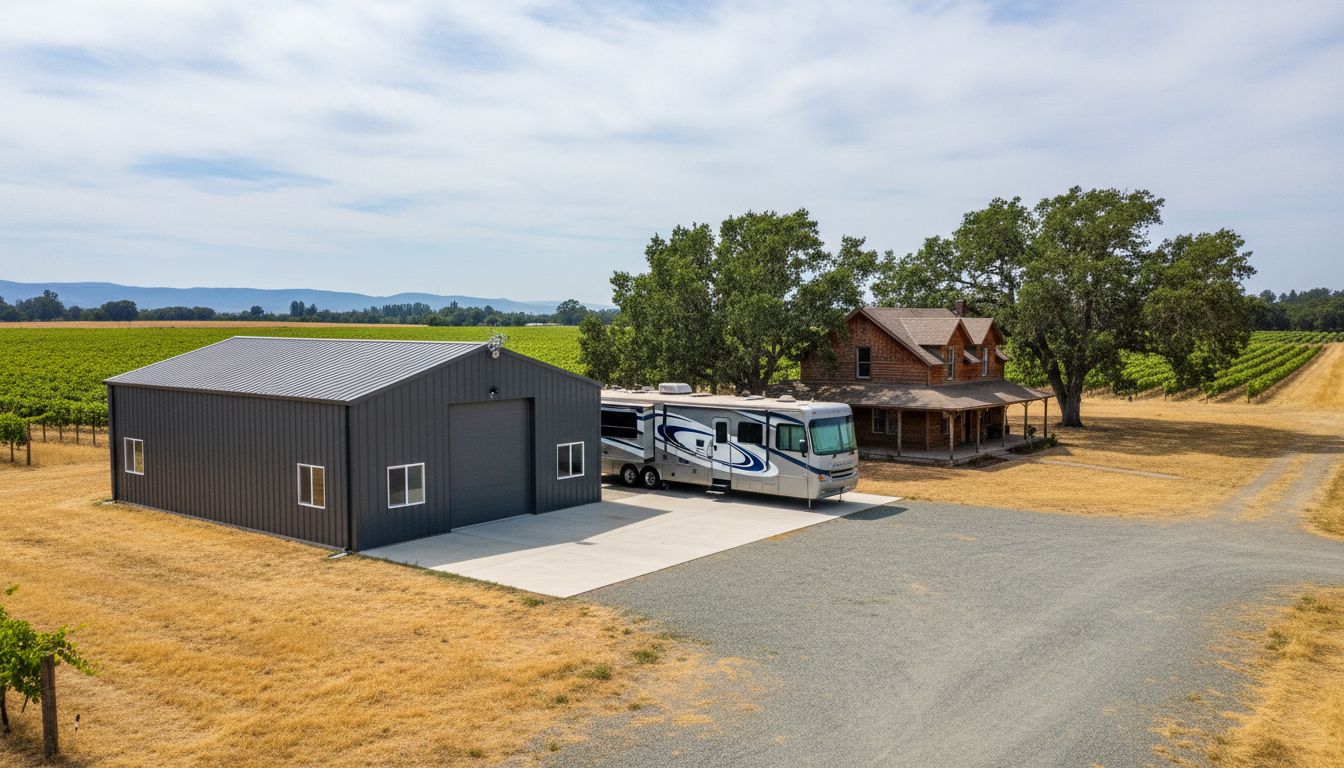
You price the house from comparable sales, then adjust for the shop and the RV parking based on what similar rural properties actually sold for, not on what the building cost to put up. Woodbridge REALTOR® Jeremiah Patterson prices these homes from documented comparables and then markets straight at the buyers who came looking for exactly that shop.
The frustration most sellers feel here is legitimate. You spent real money on that building, you use it every week, and you know what it would cost to replace. Then someone tells you the market does not value it at what you put in. That gap between cost and market value is where most pricing arguments on rural property live, and here is how to close it honestly.
TL;DR: A shop and RV parking usually add real value in Woodbridge, but almost never dollar for dollar with what they cost. Value depends on size, permitting, power, door height, floor, and access. Price from comparable sales of rural properties with similar improvements and expect an appraiser to work the same way. Then market to the narrow buyer group that wants a shop, because that group pays a premium and everyone else pays nothing. Verify any figures for your address with a current comparative market analysis.
Why do shops and RV parking matter so much in Woodbridge?
Because of who lives out here and why.
Woodbridge sits in a semi rural pocket just west of Lodi, near the Mokelumne River, where people own trucks, trailers, boats, tractors, and equipment. A meaningful share of buyers looking here are looking specifically because they cannot store or work on any of that in a subdivision with an HOA and a two car garage. For those buyers a proper shop is the reason they are shopping here at all, and some will not consider a property without one.
That creates an unusual dynamic: the improvement is close to worthless to part of the market and close to decisive for another part. So your price depends heavily on whether the second group ever sees the listing. Is Woodbridge, CA a good place to live is the case that group has already made to themselves.
What actually drives the value of a shop?
Not square footage alone. Six things, roughly in order of importance.
Permits. A permitted structure counts. An unpermitted one may be excluded from appraised value entirely, and it is a disclosure item. The biggest variable, and the one sellers most often cannot answer.
Power. A shop with adequate service, a subpanel, and real outlets is a working shop. A shop with one extension cord run from the house is a storage barn.
Door height and width. Whether an RV, a boat, or a dually with a fifth wheel actually fits is a yes or no question with a large dollar consequence. Measure it. Publish it.
Floor and foundation. Concrete with a proper slab supports lifts, equipment, and vehicle weight. Dirt or gravel does not.
Enclosure and conditioning. Fully enclosed and insulated beats open sided, and heating or cooling extends usability.
Access. A shop a buyer cannot back a trailer up to is a shop with a problem. Turning radius, gate width, and driveway surface all matter.
Two shops with identical square footage can be worth very different amounts. Buyers on acreage know the difference immediately, so your marketing has to speak in specifics.
What drives the value of RV parking specifically?
Different list, same principle.
Surface. Concrete or asphalt beats gravel, gravel beats dirt.
Dimensions. A usable pad fits the coach and allows slide outs to deploy. Publish the length and width.
Hookups. A 30 or 50 amp receptacle, water, and a sewer or dump connection separate a parking spot from a functional RV site. Whether a sewer connection is permitted and how it ties into the septic system is a question for San Joaquin County environmental health.
Access and turning. Can a large coach get in and out without a ten point turn? Overhead clearance from trees and wires? Gate wide enough?
Cover. It protects the coach, and in valley sun that matters more than buyers from cooler climates expect.
If hookup work was done without permits, disclose it, and confirm any septic tie in with the county before a buyer's inspector raises it.
How do you actually put a number on it?
You look at what the market paid, not at what you spent.
The method is comparative market analysis, and on rural property it takes more work:
Find sold comparables with similar improvements across Woodbridge, Acampo, and the surrounding unincorporated areas. You may need to go back further and wider than you would in town, then adjust.
Find paired sales where possible. Two similar properties, one with a shop and one without, sold near the same time. The cleanest evidence available.
Adjust for the six factors above. A permitted, powered, insulated shop with a fourteen foot door is a different asset than an uninsulated pole barn.
Sanity check against cost, not to set the price but to understand the ceiling. Market value rarely exceeds replacement cost and is usually well below it.
Expect a contributory value framing. Appraisers speak in terms of what an improvement contributes to overall value, typically a fraction of its cost. That is the standard method, not a slight.
Do not accept any percentage or dollar rule of thumb you find online. The only number that matters is the one supported by comparable sales near your address. Verify with a current analysis for your property.
Should you improve the shop before listing?
Sometimes, and the cheap improvements usually win.
Almost always worth doing: clean it out completely, degrease the floor, add or repair lighting, fix the door opener, repair damaged siding. A clean, well lit shop photographs like an asset. A cluttered one photographs like a junk pile, and the buyer's eye cannot tell a cluttered shop from a small one.
Often worth doing: LED lighting, added outlets, base rock on a rough approach.
Usually not worth fronting: major structural work, a full service upgrade, or a new slab. Get a written bid and let the buyer see a defined number.
Worth investigating before anything else: whether the structure is permitted. Pull the permit history from San Joaquin County. If it is not permitted, talk to the county about your options and to a licensed California real estate attorney about disclosure. Do not assume retroactive permitting is quick or cheap.
What adds the most value before selling a home in Woodbridge covers how shop work stacks against everything else competing for your prep budget.
What happens with the appraisal?
It will likely be more conservative than you want, because appraisers on rural property face the same comparable sales problem you do. Help by supplying, through the lender, a documented package: permits, year built, dimensions, door heights, electrical service, floor construction, insulation, and the RV specifications, plus your own comparable sales research. Unpermitted square footage is frequently excluded from value, which is another reason to check permit status before you list rather than during escrow.
How do you market a property whose best feature is a building?
By treating the shop as a headline product, not a bonus.
This is where most listings with great shops leave money behind. Fourteen interior shots of the house and one dark cell phone picture of a metal building. The description says "shop." That listing finds a buyer who tolerates the shop, not one who wanted it.
Photograph the shop properly. Interior wide shots with the lights on and doors open, exterior shots showing scale and approach, a vehicle or trailer inside for scale, and the RV pad with hookups visible.
Publish the specifications. Dimensions, door height and width, amperage and panel size, floor type, insulation, ceiling height, permit status, and the RV pad dimensions and hookup types. Buyers who want a shop read specs the way other buyers read kitchen descriptions.
Write to the use, not the feature. "Room for the fifth wheel, the boat, and the project truck at the same time, with 50 amp service at the pad" reaches a person. "Large shop" does not.
Target the buyer, deliberately. Truck and trailer owners, RV owners, tradespeople who need a base of operations, car enthusiasts, hobby farmers, and buyers leaving HOA neighborhoods. A small, identifiable audience that generic exposure does not reach.
This is the Master Listing Strategy applied to rural property: the buyer pool is smaller and more specific than anything in town, so the campaign has to be aimed rather than broadcast. When the right hundred people see the listing, the shop becomes a premium. When ten thousand of the wrong people see it, the shop is just a line in a description. Marketing creates demand. Price alone does not.
Buying a home in Woodbridge and what to expect from lot sizes and home styles explains what your buyer is comparing you against.
Step by step: pricing and presenting a shop property
- Pull the permit history on every structure from San Joaquin County.
- Measure everything: shop dimensions, door height and width, ceiling height, RV pad length and width, gate width.
- Document the systems: panel size, amperage, outlet types, water, any sewer or septic connection, insulation, HVAC.
- Research sold comparables with similar improvements, looking for paired sales that isolate what a shop contributed.
- Do the cheap improvements: clear it out, clean the floor, fix the lighting, repair the door.
- Get written bids on anything larger rather than fronting the work.
- Photograph the shop and RV facilities as headline features, not afterthoughts.
- Write the listing to the use case with full specifications published.
- Build a targeted campaign aimed at trailer, RV, and trade buyers, and prepare an appraisal package so the appraiser has the permits and specs in hand.
Common Mistakes to Avoid
Pricing from what you spent. Cost and market value are different numbers on rural improvements, usually by a lot. Anchor to sold comparables.
Not knowing the permit status. The biggest single variable in value and the one most sellers cannot answer. Pull the records before you list.
Listing with the shop full of stuff. A cluttered shop photographs as small and neglected. Empty it.
Describing it as "large shop" and stopping there. The buyer who wants a shop wants numbers. Give them numbers, and shoot it like a headline feature rather than one dark exterior photo.
Ignoring access. If a trailer cannot get to the pad, the pad is worth much less. Fix the approach and the gate.
Advertising unpermitted space as permitted. That is a misrepresentation problem. Disclose what you know and route the question to San Joaquin County and a licensed California real estate attorney.
Cutting the price before checking the campaign. If showings are slow, ask whether shop buyers ever saw the listing before you touch the number.
What This Looks Like in Real Life
A seller has a Woodbridge home on a couple of acres with a large permitted metal shop, concrete floor, a subpanel with heavy service, and a twelve foot roll up door, plus a gravel RV pad with a 50 amp receptacle and water. They pull the permits, measure everything, spend a weekend clearing the shop and pressure washing the floor, and add LED fixtures. The listing photos treat the shop like a second house: doors open, lights on, a truck inside for scale, the RV pad with hookups visible. Targeted outreach puts it in front of RV owners and trades across the region, and the buyers who show up came for the shop and stayed for the house.
A second scenario: a seller has an older pole barn with a dirt floor, no power, and no permit record the county can find. Rather than pretending otherwise, they describe it accurately as an unpermitted covered storage structure, get a written bid for bringing it up, and price the property with the barn as a bonus rather than finished square footage. Buyers who inspect it find exactly what the listing said, so there is no renegotiation.
Neither scenario predicts your outcome. But the pattern holds: verify the permits, document the specs, present it beautifully, and take it to the people who came looking for it.
Frequently Asked Questions
Does a shop add value to a Woodbridge home?
Usually yes, but rarely dollar for dollar with what it cost to build. Value depends heavily on permits, power, door dimensions, floor construction, and access. Price from comparable sales of similar rural properties and verify with a current market analysis for your address.
Will an appraiser count my unpermitted shop?
Frequently not, or not at full value. Unpermitted structures are often excluded or heavily discounted, and they are also a disclosure item. Pull your permit history from San Joaquin County before you list, and talk to a licensed California real estate attorney about the disclosure.
Is RV parking worth adding before I sell?
Cheap improvements to an existing pad often pay off: cleaning up the approach, adding base rock, fixing the gate, making sure a coach can turn in. Building a new pad with full hookups is a larger project with uncertain return, and any sewer connection needs checking with San Joaquin County environmental health.
Should I empty the shop before listing?
Yes, completely. A cluttered shop reads as smaller and less cared for in every photograph, and buyers cannot mentally subtract your belongings. It is one of the highest return hours of prep available on a rural property.
Do buyers actually pay more for a shop, or do they just like it?
Some pay meaningfully more, and those buyers are a specific minority of the market. That is why targeted marketing matters more here than almost anywhere else. If the shop buyers never see your listing, the shop is worth close to nothing to whoever does.
Ready to price and sell your Woodbridge shop property?
Verify, document, target. Three steps:
- Pull your permit history from San Joaquin County and measure every dimension and electrical spec, so the value conversation starts from facts.
- Get a value picture built from comparable rural sales with similar improvements. Start with a free home evaluation.
- Build a campaign aimed at RV, trailer, and trade buyers, so the people who want the shop are the ones bidding. Get in touch and we will walk the property, spec the shop, and map the launch.
Jeremiah Patterson is a REALTOR® and Vice President at Cornerstone Real Estate Group (CA DRE #02017640), with 220+ closed transactions and more than $87 million in San Joaquin County sales since 2016. His listings sell in a median of 13 days, with 55% under contract within 14 days, and he holds a 5.0 rating across 180 verified reviews (RateMyAgent 72, Realtor.com 61, Google 32, Yelp 15). He's a Move-Up Specialist and works with out-of-state, remote, and inherited/estate sellers as well as first-time buyers across Lodi, Stockton, Woodbridge, Acampo, Galt, and San Joaquin County. He was named RateMyAgent County Top 5 for San Joaquin County five consecutive years (2022-2026) and is a Lifetime Member of the Lodi Association of REALTORS® Masters Club. Reach him at (209) 329-7238 or jeremiah@sellingsanjoaquin.com.
Before you list, read what adds the most value before selling a home in Woodbridge and the rural and semi rural Woodbridge guide to wells, septic, and acreage, since a shop property is usually a well and septic property too. Woodbridge versus Lodi and which is right for you is the comparison your buyer is running.
Jeremiah Patterson
Cornerstone Real Estate Group
224 W Pine St, Lodi, CA 95240
Phone (209) 329-7238
Email jeremiah@sellingsanjoaquin.com
CA DRE #02017640 · Brokerage DRE #01037761
Practicing since 2016
Categories
Recent Posts

GET MORE INFORMATION