How Do You Price a Lodi Home That Backs to a Busy Road or the Railroad?
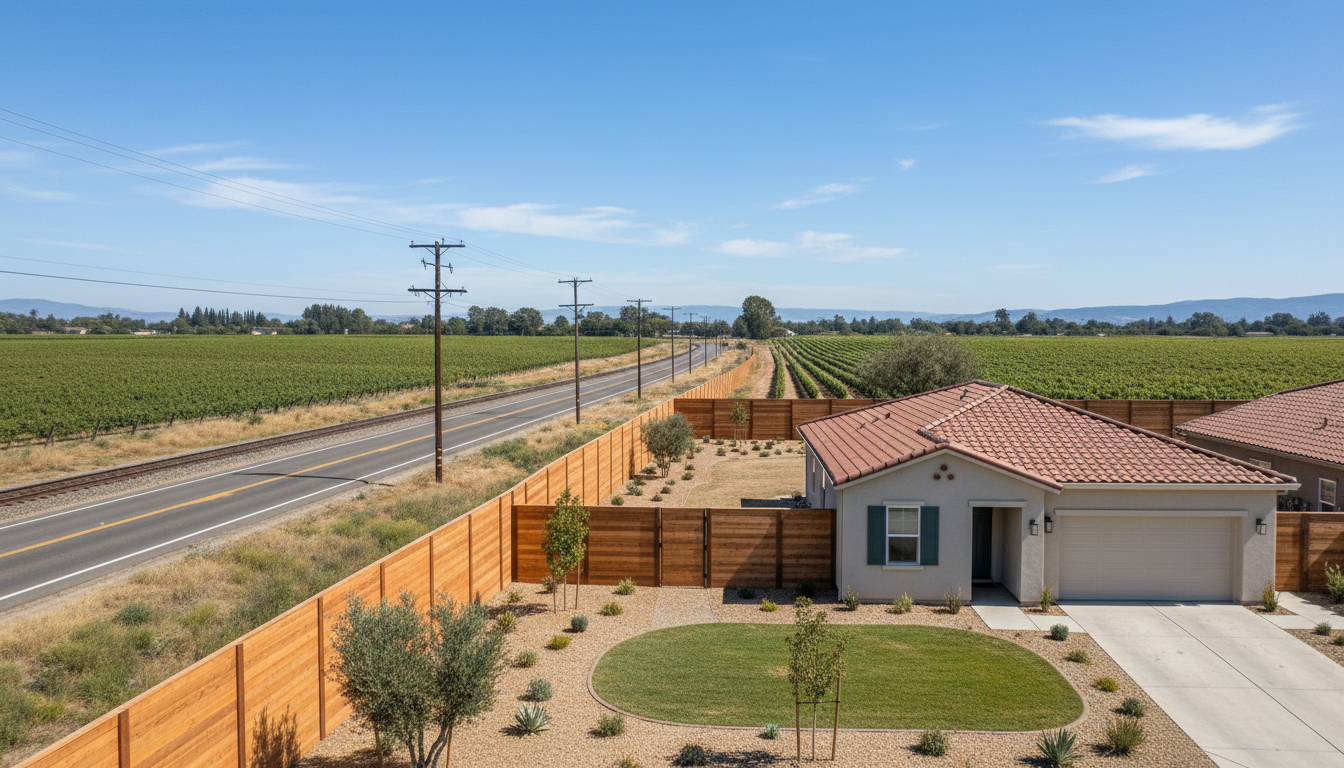
A Lodi home that backs to a busy road or the railroad usually sells for less than an identical home on a quiet interior street, but the gap is narrower than most sellers assume. Lodi REALTOR® Jeremiah Patterson prices it against comparable exposed homes, not perfect ones, and markets it to the buyers who genuinely don't mind.
That group is bigger than you'd think, and finding them is the entire job. The mistake isn't owning a house on Kettleman or near the tracks. It's pricing it as though every buyer reacts the same way to a passing train.
TL;DR: Price a location-affected home against other location-affected sales, not the pristine comp three streets over. The adjustment varies with how severe the exposure is, what buffering exists, and what price band you're in, so any percentage you read online is guesswork until someone runs paired sales for your address. Then reduce the perceived impact with fencing, landscaping, and windows, disclose honestly, and market to the buyer who values the tradeoff. Cutting the price by itself just tells buyers you agree the house is compromised.
Which Lodi Locations Are We Actually Talking About?
Not all exposure is equal, and the differences matter more than the label.
Homes along Kettleman Lane, Lower Sacramento Road, Cherokee Lane, Ham Lane, and Turner Road carry different levels of traffic depending on the segment. A house on a stretch with a sound wall, a wide setback, and mature trees is in a completely different position than one where the back fence is the only thing between the patio and the lane.
Homes near the rail corridor have a different profile. Train noise is intermittent rather than constant, which some buyers find easier to live with and others find much worse. Horn noise, crossing proximity, and vibration all vary by exactly where you sit. Near Highway 99, the sound is a constant background hum rather than a discrete event.
So "backs to a busy road" describes a dozen materially different situations in Lodi, and pricing starts with which one you have. In south Lodi specifically, whether the Kettleman Lane and south Lodi area is a good place to buy shows how buyers there weigh the tradeoffs.
How Much Does It Actually Reduce the Value?
Honestly? It depends more than sellers want it to.
I'm not going to hand you a percentage, and I'd be skeptical of anyone who does. The adjustment depends on how severe the exposure is, whether there's meaningful buffering, what the home offers to offset it, your price band, and how tight the supply of alternatives is.
What I can tell you is how to find your real number. It's called a paired sales analysis: you find cases where a home with the exposure sold and a similar home without it sold in the same area and timeframe, and you measure the difference. Do that across several pairs and a range emerges.
That range is what we price against. Not a rule of thumb, not what your neighbor thinks, and definitely not a national statistic. If you want that analysis run for your address, what your home is worth in Lodi is the starting point.
Why Do Sellers Get This Wrong in Both Directions?
Two failure modes, and I see both regularly.
Overpricing by ignoring it. The seller uses interior-street comps because those are the numbers they want to be true. The home lists high, sits, and reduces its way down past where it should have started. Now it's a stale listing with a location issue, which is far harder to sell. How to price a Lodi home in a slower market walks through that spiral.
Overcorrecting out of embarrassment. The seller assumes the road is a fatal flaw and prices defensively low. That's a real loss of money, and it signals that even the seller thinks something's wrong.
The right position is in between: priced accurately against comparable exposed homes, then marketed hard enough to attract several buyers who accept the tradeoff.
Who Actually Buys These Homes?
This is where the opportunity lives, and it's why I push back on the idea that price is the only lever.
Plenty of people genuinely don't mind. Buyers who grew up near tracks or a highway and find the sound normal. Buyers from denser Bay Area or Sacramento neighborhoods, for whom Kettleman traffic is quiet by comparison. Buyers trading noise for more square footage or a bigger lot than their budget otherwise allows. Buyers who value the commute access of a main artery.
That's a real pool, just a narrower one, which means passive marketing fails. List an exposed home and wait for whoever wanders by, and you get buyers comparing it to quiet-street homes and finding it lacking. Reach the people for whom this is a smart trade, and you get buyers comparing it to what else they could afford. Completely different conversation.
What Can You Do to Reduce the Impact?
Some of this is genuinely fixable, and the return on it is often better than the equivalent dollars spent on a price reduction.
Sound buffering. A solid fence with no gaps does more than people expect, and so do dense evergreen plantings along the back line. Neither eliminates road noise, but both change how the yard feels during a showing. A sagging fence reads as neglect and amplifies the problem.
Windows. Dual pane windows on the exposed side address the problem directly, and buyers notice when they step into a quiet room. Get quotes before assuming it's out of reach.
Yard orientation. If the patio faces the road, moving the outdoor living space to the sheltered side of the lot changes the whole experience of the home. Often a weekend of work.
General condition everywhere else. An exposed home has to win on everything it can control. What to fix before selling in Lodi is the right checklist, and it matters more here than on an interior street.
How Does Marketing Change the Outcome?
Substantially, and this is the part most agents skip.
Marketing creates demand. Price alone does not. Lowering the price on a home that backs to the railroad does not produce a buyer who wants to live near the railroad. It just produces a cheaper version of the same problem. What produces that buyer is finding them and showing them why this trade is a good one.
The Master Listing Strategy handles it this way. We prepare the home first, including the buffering work above. We shoot photography that's honest about the setting but frames the home at its best, at hours when light and traffic work in our favor. The copy leads with what this house gives you for the money rather than dancing around the location, because evasive copy makes buyers suspicious. And we distribute well beyond people already scrolling Lodi listings, since many buyers who don't mind a busy road come from places where far worse is normal.
That concentration matters most on homes like this. One interested buyer means one buyer setting the terms. Several means the location stops being the entire conversation. Why the first 14 days determine how many offers a Lodi home gets explains the mechanics of that window.
What Do You Have to Disclose?
Everything you know, and this is not a place for strategy. California takes seller disclosure seriously. If you know about noise, vibration, traffic, or anything else affecting the property, disclose it. The location is visible and audible to any buyer who visits, so there's no advantage in being coy and substantial risk in being incomplete.
Disclosing early also works in your favor. A buyer who learns about the tracks from you on day one and buys anyway is a committed buyer. One who discovers it on a second visit feels misled and starts hunting for other problems.
For the framework of what generally goes into California seller disclosures, what you should disclose when selling a Lodi home is the overview. For your specific obligations, talk to a real estate attorney. Disclosure disputes are among the most expensive mistakes a seller can make.
How to Price and Position It, Step by Step
-
Define the exposure precisely. Which road, which segment, how far back, what buffering exists, and what a buyer hears standing in the yard at different hours.
-
Pull paired sales. Measure the real gap between similar exposed and unexposed homes rather than guessing at one.
-
Set the price against exposed comps. Your competition is other homes with a tradeoff, not the pristine interior-street listing.
-
Fix what's fixable first. Fence, landscaping, windows on the exposed side, yard orientation. Before photography, not after.
-
Prepare the disclosure package early. Complete and available before buyers write. Fewer surprises, fewer renegotiations.
-
Shoot photography deliberately. Right hour, right angles, honest but flattering, including the features that offset the location.
-
Write copy that leads with the trade. More house, bigger lot, better access, priced accordingly. Confidence sells better than apology.
-
Distribute beyond the local pool. The buyer who doesn't mind often isn't from here.
-
Watch the first two weeks. Showing volume and feedback tell you whether the price is right. Adjust with data, not anxiety.
Common Mistakes to Avoid
Pricing against interior-street comps. The single most expensive mistake, because it costs you the launch window before you ever find out.
Panic-pricing far below the exposed comps. Buyers interpret an unusually low price as a signal that something is worse than they can see. You lose money and gain suspicion.
Photographing around the problem. Every angle carefully avoiding the back fence tells buyers what you're hiding before they visit.
Leaving the back fence in poor shape. The cheapest fix on the list and the most visible. A tired fence makes the whole home feel exposed.
Being vague in the disclosures. Incomplete disclosure on an obvious condition is the worst risk-reward trade in the entire transaction. Complete it, and talk to an attorney if you're unsure.
Assuming nobody wants the house. Plenty of people do. They just have to be found rather than waited for.
What This Looks Like in Real Life
Scenario one. A Lodi home backs directly onto a busy arterial, with a tired wooden fence and nothing else between the patio and the traffic. The sellers assume they'll have to give away a large chunk of value. Instead we spend a few weeks replacing the fence, adding dense plantings along the rear line, and moving the outdoor living area to the side yard, which turns out to be shielded and pleasant. We pull paired sales to set a realistic price, disclose the traffic fully upfront, and market toward relocating buyers. The buyer who writes the offer had been looking at homes on much louder streets in a bigger city and considered the yard quiet.
Scenario two. A home a few blocks from the tracks lists at interior-street pricing because the wrong comps were used. It sits for weeks, takes two reductions, and starts to look like a problem property. Back on the market, we reset the price against genuinely comparable sales, refresh the photography, and rewrite the copy to lead with the square footage and lot size the buyer gets for the money. It goes under contract to someone who had seen it the first time and passed on the price, not the trains.
Frequently Asked Questions
How much less is a home worth if it backs to a busy road in Lodi?
There's no single figure, and any percentage quoted without looking at your address is a guess. It depends on the severity of the exposure, the buffering, the price band, and what else is available at the time. The reliable method is a paired sales analysis on comparable Lodi properties, which I'll run for your specific home.
Does a train nearby hurt value more than car traffic?
Not necessarily. Train noise is intermittent and loud, road noise is constant and lower. Different buyers react differently to each, and some find intermittent noise far easier to live with. What matters most is the actual distance, whether there's a crossing nearby, and what buffering exists between the tracks and the home.
Is it better to just price low and sell fast?
Rarely. Pricing meaningfully below comparable exposed sales gives away real money and signals that something is worse than buyers can see. Price it accurately against the right comps, then let marketing create the competition that protects the number.
Do I have to disclose road or train noise if the buyer can obviously hear it?
Disclose what you know regardless of what you think is obvious. California seller disclosure obligations are serious, and being thorough protects you. For your specific legal obligations, talk to a real estate attorney rather than relying on general guidance.
Ready to Find Out What Your Home Is Really Worth?
The only way to answer the pricing question honestly is to look at your specific street and pull the comparable sales that actually apply.
-
Request a free home evaluation. A free home evaluation includes the paired sales work for a location-affected home, not a generic estimate.
-
Walk the property with me. Fifteen minutes in your backyard at a couple of different hours tells us more about the real exposure than any map, and it tells us what buffering is worth doing.
-
Get a plan for the prep work. Reach me through the contact page and we'll build the short list of fixes that reduce the perceived impact before we shoot photography.
Jeremiah Patterson is a REALTOR® and Vice President at Cornerstone Real Estate Group (CA DRE #02017640), with 220+ closed transactions and more than $87 million in San Joaquin County sales since 2016. His listings sell in a median of 13 days, with 55% under contract within 14 days, and he holds a 5.0 rating across 180 verified reviews (RateMyAgent 72, Realtor.com 61, Google 32, Yelp 15). He's a Move-Up Specialist and works with out-of-state, remote, and inherited/estate sellers as well as first-time buyers across Lodi, Stockton, Woodbridge, Acampo, Galt, and San Joaquin County. He was named RateMyAgent County Top 5 for San Joaquin County five consecutive years (2022-2026) and is a Lifetime Member of the Lodi Association of REALTORS® Masters Club. Reach him at (209) 329-7238 or jeremiah@sellingsanjoaquin.com.
If you're weighing a sale on a busy street, it's worth reading how to sell your house in Lodi from start to finish for the overall sequence, and what it costs to sell a house in Lodi so you can see what a realistic price actually nets you.
Jeremiah Patterson Cornerstone Real Estate Group 224 W Pine St, Lodi, CA 95240 Phone (209) 329-7238 Email jeremiah@sellingsanjoaquin.com CA DRE #02017640 · Brokerage DRE #01037761 Practicing since 2016
Categories
Recent Posts



GET MORE INFORMATION