What Should a Stockton Seller Do When Three Neighbors List the Same Week?
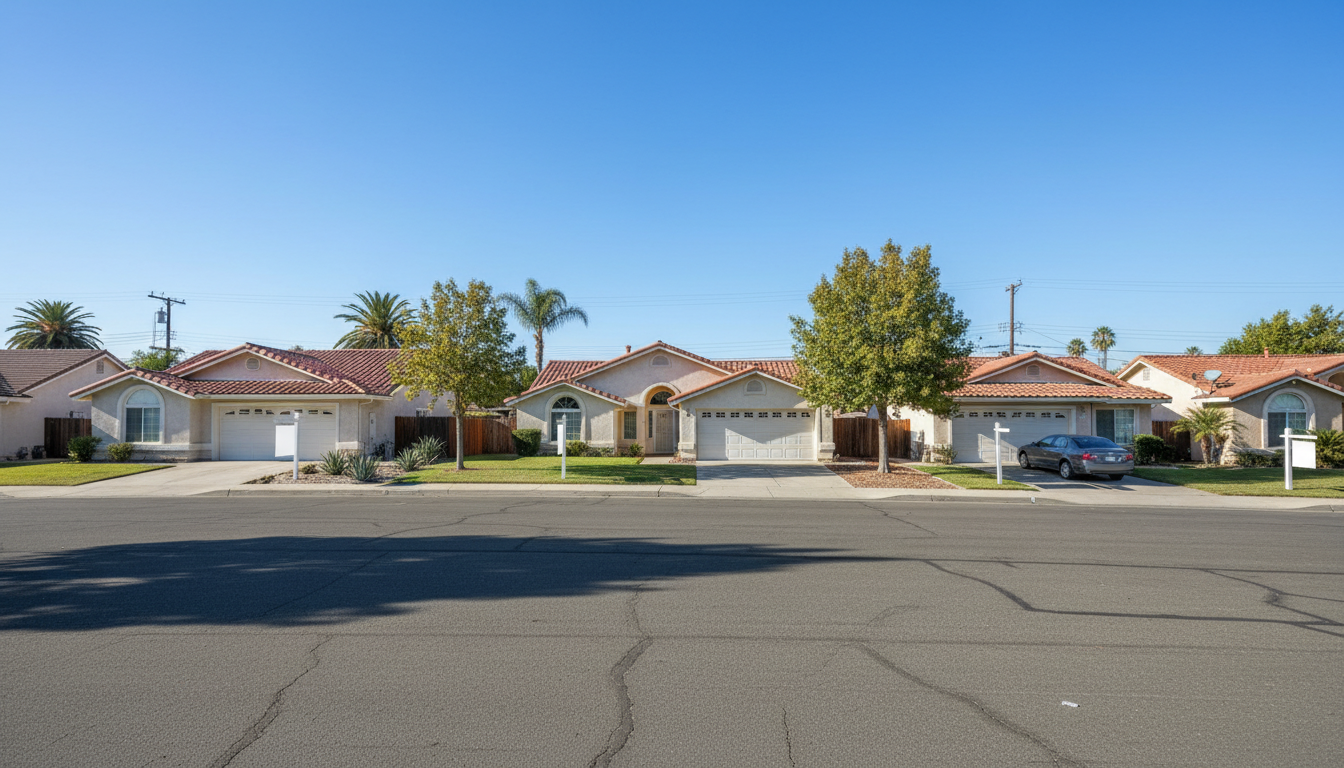
Compete on marketing, not on price. When three neighbors list the same week, Stockton REALTOR® Jeremiah Patterson repositions the home so it does not read as one of four interchangeable options: sharper photography, a distinct story, and a targeted campaign aimed at the specific buyers most likely to want your house rather than the block.
The fear underneath that is simple. You assume whoever blinks first on price wins, and you are about to be in a race to the bottom with people you wave to at the mailbox. That race is optional, and sellers who understand why usually finish first without ever making the first cut.
Here is how to handle a crowded street.
TL;DR: A cluster of listings on one street does not divide the buyers evenly. It concentrates attention, and the home that presents best captures most of it. Do not lead with a price cut. Lead with presentation, positioning, and targeted outreach. Find the two or three things your home genuinely does better, prove them in the photos and the copy, and put the listing in front of buyers who are already searching your price band and your part of Stockton. Price still has to be defensible, but price is your last lever, not your first.
Is more competition on your street actually bad?
Less than you think, and in some ways it helps.
Streets cluster for ordinary reasons: homes from the same phase hitting the same maintenance milestones, neighbors at the same life stage, and everyone who has been thinking about it since January calling an agent the week spring arrives. Buyers rarely read anything sinister into it. What they do read is comparison, and four similar homes on one street turns a home search into a spreadsheet.
A cluster creates gravity. Buyers who were casually watching your area now have a reason to spend a Saturday there. Agents build tours around the street because they can show four homes without moving the car. Traffic goes up for everybody, including you.
The risk is not fewer buyers. The risk is that the traffic flows to whichever listing photographs best, presents best, and answers the buyer's questions fastest, and the rest become the comparison set that makes the winner look good. There is a real cost to being the home that makes the neighbor's home look like a deal.
What do buyers actually do when four similar homes are live?
They sort ruthlessly, in seconds, on a phone.
Buyers do not tour four homes on one street and weigh them carefully. They scroll a search results page, look at the first photo of each, and decide which two are worth opening. Then they look at a dozen more photos and decide which one is worth a Saturday.
That means the fight is not won at the showing. It is won on the results page and in the first dozen images. A home with dim photos taken on an overcast afternoon loses to a home shot properly, even if it is objectively the better house. That is the whole reason professional photography versus phone photos and the listing math matters more in a crowded week than in a quiet one. When you are the only listing, mediocre photos delay you. When you are one of four, mediocre photos eliminate you.
The second thing buyers do is look for the differences. Same floor plan, same era, same street, so what actually separates them? If your listing does not answer that in the first three lines of copy, the buyer decides the difference is price.
How do you find your real differentiator?
Walk the competing listings the way a buyer would, then be honest.
Go see them. Every one. Look at condition, finishes, yard, layout, natural light, garage, storage, and the things nobody photographs like the state of the fence and the condition of the driveway. Read their disclosures if you can. Note their price and what they are including.
Then write down where you genuinely win. Not where you wish you won. Real advantages usually fall into a few categories:
- Condition. Newer roof, updated HVAC, newer water heater, recent electrical work, fresh paint. Buyers pay for the absence of a project list.
- Kitchen and bathrooms. These carry the emotional weight in most price bands.
- Lot and orientation. Bigger yard, better shade, better privacy, a usable side yard, a back yard that gets sun at the right time of day.
- Layout. A downstairs bedroom, a real office, a better primary suite, a smarter flow for entertaining.
- Systems and efficiency. Owned solar, dual pane windows, newer insulation, an updated panel.
- Turnkey readiness. Nothing needs doing on move-in day, and you can prove it with receipts.
If you find two or three genuine advantages, you have a campaign. If you find none, you have a preparation problem, and the answer is to fix it before you list rather than discount after. Working through the 14 day pre listing prep checklist for Stockton sellers is the fastest way to build a differentiator you do not currently have.
Should you cut your price to get ahead of the neighbors?
Not first, and usually not by much.
Cutting price to lead a cluster has three problems. It invites the neighbors to cut too, and now everyone is cheaper and nobody has an advantage. It signals urgency, which buyers read and price into their offers. And it gives away real money to solve a problem that is often a presentation problem in disguise.
Price still has to be defensible. If your home is genuinely inferior in condition or layout to the others and you are asking more, no amount of marketing fixes that, and buyers will simply buy the better home. But if your home is comparable or better and you are priced in line, a cut is not the answer. Targeted demand is.
Set your number from comparable closed sales and from an honest read of the active competition, then hold it while you execute. How to price a Stockton home in a slower market walks through building a number you can defend when a neighbor undercuts you on day nine.
How do you out-market the block instead of undercutting it?
This is the Master Listing Strategy applied to a crowded street: rather than lowering the price until someone notices you, create demand among the buyers most likely to want your specific home.
Own the first photo. It is the single highest leverage decision in a cluster. Pick the image that shows what you win on, not the standard front elevation everyone else is using.
Shoot at the right time. Light does more for a photo than any amount of editing. If your back yard is the differentiator, shoot it when the light is good, not when the photographer happened to be free.
Write copy that names the difference in the first line. "Only home on the street with an owned solar system and a new HVAC" beats "charming three bedroom home" every time, because it answers the exact question the buyer is asking.
Go find the buyers rather than waiting for them. A listing sitting on the portals is competing head to head with three neighbors on the same page. A targeted campaign reaches people in their feed, on their phone, outside the comparison context, framed around your home rather than the block. Targeted digital buyer outreach for Stockton sellers covers how that works in practice.
Time your launch deliberately. Going live at the same hour as everyone else guarantees a side by side comparison. Being a few days early with a fully prepared listing, or a couple of weeks later with a stronger presentation, both beat landing in the middle of the pile half ready.
Make it easy to see. Flexible showings, fast responses, disclosures ready up front. In a cluster, friction sends the buyer next door literally.
Marketing creates demand. Price alone does not, and on a street with four similar homes, price alone mostly creates a discount.
What if you are already listed and the neighbors came after you?
You still have the advantage, but you have to use it fast.
You have days on market they do not, and you have showing feedback they do not. Use it. Refresh the photos if the originals are weak. Rewrite the first three lines of the description around your genuine differentiator. Push a targeted campaign in the exact price band the new listings occupy so buyers looking at them see you too.
If you were already getting showings without offers before the neighbors arrived, the cluster is not your core problem. Why a Stockton listing gets showings but no offers covers what to check first, because adding competition to an existing conversion problem makes it visible rather than causing it.
Step by step: the first two weeks against three neighbors
- Tour every competing listing in person and take notes on condition, finishes, and lot.
- Write down where you genuinely win and where you genuinely lose. Be honest about both.
- Fix what is cheap and visible: paint, landscaping, lighting, decluttering, the front door.
- Rebuild the photo set with a first image that leads with your advantage.
- Rewrite the first three lines of copy to name the difference immediately.
- Confirm the price is defensible against closed comparable sales, not against what the neighbors are asking.
- Launch a targeted campaign aimed at buyers already searching your band and your part of Stockton.
- Have disclosures ready on day one so a motivated buyer can move without waiting.
- Make showings frictionless and respond to every request the same day.
- Hold your price through the first ten days while the campaign works, then reassess with real data.
Common Mistakes to Avoid
Cutting price on day three. You have not learned anything yet, and you have taught the buyers to wait for the next cut.
Assuming buyers see the difference. They cannot see a new roof in a photo. If it is not written down and documented, it does not exist in the comparison.
Reusing weak photos because they are already done. In a cluster, the photo set is the competition. Reshooting is cheaper than the discount you will otherwise pay.
Racing to be first regardless of readiness. A half prepared listing that goes live early loses to a fully prepared listing that goes live a week later.
Talking price with the neighbors. Coordinating pricing with competing sellers is a place to be very careful. Talk to your own agent, and if you have questions about what is permissible, ask a real estate attorney.
Ignoring the ones that go under contract. When a neighbor gets an offer, find out what their home offered that yours did not. That is free market research.
Treating showings as the finish line. In a crowded week the search results page eliminates you long before anyone opens the front door.
What This Looks Like in Real Life
A seller lists a Stockton home in a subdivision where two neighbors go live the same week and a third follows days later. All four are similar in size and era. Instead of pricing under the group, the seller walks the other three, notices that none of them have updated their kitchens and that two have visibly tired yards, and builds the entire campaign around a refreshed kitchen and a shaded, usable back yard. The lead photo is the kitchen rather than the front of the house. The description opens by naming the update and the yard. A targeted campaign runs to buyers already searching that price range nearby. The home draws the majority of the weekend traffic on the street because it is the one people want to see in person, not the one that is a few thousand cheaper.
A second scenario: a seller is already a month in when two neighbors list. Rather than reducing, they reshoot the photos in better light, rewrite the opening lines around a downstairs bedroom the competing floor plans do not have, and run outreach to buyers who need a first floor guest room. That feature was in the listing all along, buried mid paragraph. Named at the top, it became the reason a specific buyer chose that home over three near identical alternatives.
Neither predicts your outcome. Every street behaves differently. But the pattern holds: find the real difference, prove it visually, and take it to the people who care about it.
Frequently Asked Questions
Should I wait for my neighbors to sell before I list?
Usually not. Waiting hands the current buyer pool to them and puts you on the market later with less information and a shorter selling window. If your home genuinely needs preparation to compete, use the time for that, not for waiting.
Will three listings on one street lower my home's value?
Active listings do not set value, closed sales do. A cluster can slow how fast you sell and increase how hard you have to work for attention, but the number an appraiser and a buyer's lender rely on comes from what actually closed.
Should I price below my neighbors to be the obvious choice?
Only if your home is genuinely weaker than theirs. Otherwise you are paying real money to solve a visibility problem that better photos, better copy, and targeted outreach solve more cheaply.
What if a neighbor's home is objectively nicer than mine?
Then compete on something other than being nicer. Condition, terms, flexibility on closing timeline, readiness, and reaching a different slice of buyers all work. And be realistic about price relative to the better home rather than relative to what you hoped.
Can I coordinate with my neighbors on pricing or timing?
Be careful here. Coordinating price with competing sellers raises legal questions outside an agent's lane. Talk strategy with your own agent, and ask a real estate attorney about what is appropriate.
How long should I hold my price before adjusting?
Give a well built campaign a real window, usually the first couple of weeks, and judge by showing volume and feedback rather than by what a neighbor did. Strong traffic without offers usually points to condition or presentation. Thin traffic points to exposure or price.
Ready to compete without cutting your price?
You do not beat three neighbors by being cheaper. You beat them by being the one buyers want to see. Three steps:
- Tour the competing listings and write down where your home genuinely wins.
- Get a clear read on what your home is worth against the closed comparable sales, not against what the neighbors are asking. Start with a free home evaluation.
- Build the photo set, the copy, and the targeted campaign before you touch the price. Get in touch and we will walk your home, walk theirs, and map the launch.
Jeremiah Patterson is a REALTOR® and Vice President at Cornerstone Real Estate Group (CA DRE #02017640), with 220+ closed transactions and more than $87 million in San Joaquin County sales since 2016. His listings sell in a median of 13 days, with 55% under contract within 14 days, and he holds a 5.0 rating across 180 verified reviews (RateMyAgent 72, Realtor.com 61, Google 32, Yelp 15). He's a Move-Up Specialist and works with out-of-state, remote, and inherited/estate sellers as well as first-time buyers across Lodi, Stockton, Woodbridge, Acampo, Galt, and San Joaquin County. He was named RateMyAgent County Top 5 for San Joaquin County five consecutive years (2022-2026) and is a Lifetime Member of the Lodi Association of REALTORS® Masters Club. Reach him at (209) 329-7238 or jeremiah@sellingsanjoaquin.com.
Before you go live, read how to price a Stockton home in a slower market and work through the 14 day pre listing prep checklist. Then read why a Stockton listing gets showings but no offers, because a crowded street exposes conversion problems it did not create.
Jeremiah Patterson
Cornerstone Real Estate Group
224 W Pine St, Lodi, CA 95240
Phone (209) 329-7238
Email jeremiah@sellingsanjoaquin.com
CA DRE #02017640 · Brokerage DRE #01037761
Practicing since 2016
Categories
Recent Posts







GET MORE INFORMATION